



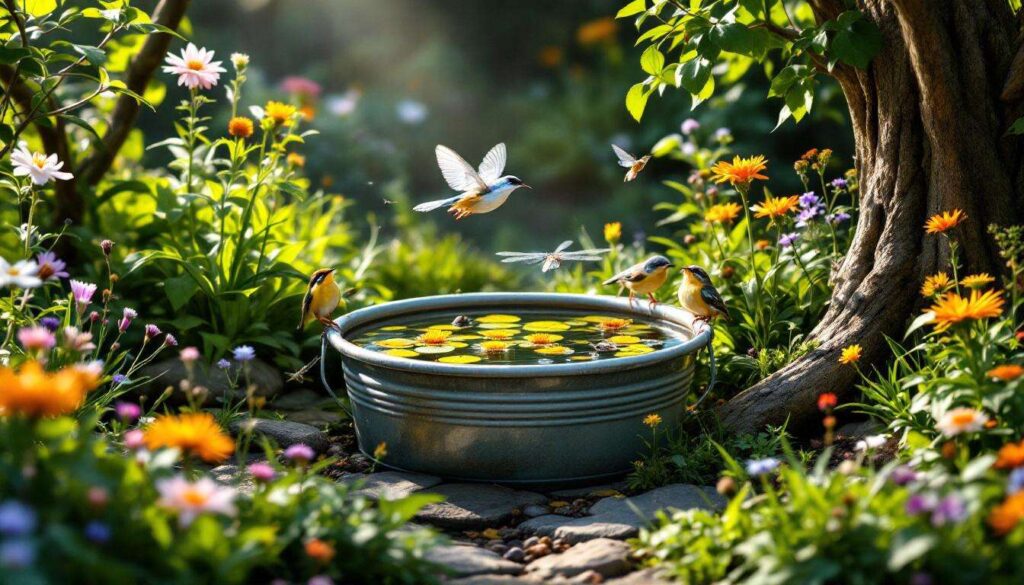
Garden wildlife faces increasing challenges in finding suitable habitats, particularly access to water. A simple bucket can become a thriving mini pond, offering a lifeline to numerous species whilst requiring minimal space, effort, or investment. This accessible solution transforms any outdoor area into a valuable refuge for insects, amphibians, and birds, regardless of garden size or budget constraints.
Creating a mini pond with a bucket: why it’s easy and affordable
The simplicity of bucket pond construction
Building a mini pond requires no specialist knowledge or expensive equipment. Unlike traditional pond installation involving excavation, liners, and complex filtration systems, a bucket pond can be established in under an hour. Any watertight container works perfectly, from plastic buckets to old washing-up bowls, ceramic pots, or even retired kitchen sinks. The beauty lies in repurposing existing materials, making this an environmentally conscious choice that diverts items from landfill.
Cost-effective wildlife support
Financial barriers often prevent gardeners from creating wildlife habitats, but bucket ponds eliminate this obstacle. The essential components cost virtually nothing:
- A container you already own or can acquire for free
- Rainwater collected from downpipes
- Stones and pebbles from your garden or local area
- Native pond plants, often available through plant swaps or divisions from friends
- Logs or twigs for access ramps
This minimal investment delivers maximum ecological impact, making wildlife conservation accessible to everyone regardless of financial circumstances. The portability of bucket ponds also means renters can take their wildlife habitat when they move, unlike permanent garden features.
Flexibility for any space
Urban gardens, balconies, patios, and courtyards all provide suitable locations. The compact footprint of a bucket pond means even the smallest outdoor space can accommodate one. This flexibility extends to positioning: move your pond to optimise sunlight exposure, protect it from harsh weather, or simply experiment with different locations. Understanding the practical aspects naturally leads to the actual construction process.
The steps to transform a bucket into a pond
Selecting and preparing your container
Choose a bucket at least 30 centimetres deep to provide adequate water volume and temperature stability. Darker containers help prevent excessive algae growth by limiting light penetration. Before filling, scrub the bucket thoroughly with water only, avoiding detergents or chemicals that could harm wildlife. If using a new plastic bucket, leave it filled with water for several days, emptying and refilling to remove any manufacturing residues.
Creating accessible entry and exit points
Wildlife requires safe access to avoid drowning. Arrange stones or bricks inside the bucket to create a graduated slope from the rim to the bottom, forming shallow and deep zones. Position larger rocks to break the water surface, providing landing platforms for insects and drinking perches for birds. Add a sturdy branch or log angled from the rim into the water, offering an emergency exit route for any creature that falls in.
Filling and planting your mini pond
Rainwater proves superior to tap water, which contains chemicals harmful to aquatic life. Fill your bucket and allow it to settle for at least 48 hours before introducing plants. Select native aquatic species suited to container growing:
- Oxygenating plants like water starwort or hornwort
- Marginal plants such as marsh marigold or water forget-me-not
- Floating plants including frogbit or water soldier
Plant directly into aquatic compost within mesh baskets, positioning them at appropriate depths using bricks or stones as supports. Once established, these plants create the foundation for a thriving ecosystem, which brings us to the broader environmental significance.
The importance of mini ponds for biodiversity
Addressing the water crisis for wildlife
Natural water sources have declined dramatically due to urban development, agricultural intensification, and climate change. Ponds, streams, and wetlands that once dotted the landscape have disappeared, leaving wildlife struggling to find drinking water and breeding sites. Mini ponds fill critical gaps in this fragmented habitat network, functioning as stepping stones that connect isolated populations and enable species movement across urban and suburban areas.
Supporting declining species
| Species Group | Benefits from Mini Ponds | Conservation Status |
|---|---|---|
| Amphibians | Breeding habitat, moisture regulation | Declining across UK |
| Aquatic invertebrates | Complete life cycle support | Many species threatened |
| Birds | Drinking and bathing facilities | Population pressures increasing |
| Hedgehogs | Essential water source | Critically endangered in UK |
Creating habitat networks
Individual bucket ponds may seem insignificant, but collectively they form vital wildlife corridors. When multiple gardens in a neighbourhood install mini ponds, they establish a network supporting genetic diversity and population resilience. This distributed approach to conservation proves more effective than isolated large ponds, as it provides numerous access points and reduces the impact of localised threats. The diversity these ponds support becomes apparent when observing the visitors they attract.
What types of wildlife will your mini pond attract ?
Insects and invertebrates
Your bucket pond will quickly become home to an astonishing variety of invertebrates. Within days, you may observe:
- Pond skaters gliding across the surface
- Water boatmen rowing through the depths
- Damselflies and dragonflies laying eggs
- Whirligig beetles spinning in groups
- Freshwater snails grazing on algae
- Mayfly and caddisfly larvae developing underwater
These creatures arrive naturally, flying in as adults or carried as eggs on birds’ feet. They form the foundation of the pond food web, supporting larger animals whilst controlling mosquito populations and processing organic matter.
Amphibians discovering your pond
Frogs, toads, and newts actively search for breeding sites during spring. A bucket pond, though small, can support amphibian reproduction if it contains sufficient vegetation and remains undisturbed. Tadpoles develop successfully in containers, particularly if the pond receives partial shade preventing overheating. Even if breeding doesn’t occur, amphibians will visit regularly to hydrate and hunt, as their permeable skin requires frequent moisture.
Birds and mammals as visitors
Birds rapidly discover new water sources, using bucket ponds for drinking and bathing throughout the year. Expect visits from blackbirds, robins, blue tits, and house sparrows. During hot weather, hedgehogs, foxes, and even badgers may drink from accessible ponds at night. The shallow margins you’ve created prove essential for smaller birds that cannot access deeper water safely. Maintaining this thriving habitat requires some ongoing attention.
How to maintain your pond to maximise its efficiency
Water level management
Evaporation reduces water levels, particularly during summer. Top up regularly using rainwater collected in water butts rather than tap water. Avoid complete water changes unless absolutely necessary, as established ponds contain beneficial bacteria and microorganisms essential for ecosystem balance. If levels drop significantly, refill gradually over several days to prevent temperature shock affecting resident creatures.
Seasonal care requirements
Different seasons demand specific maintenance approaches:
- Spring: remove excess dead vegetation, divide overcrowded plants, check for spawn
- Summer: monitor water levels, remove excessive algae by hand, ensure shade during heatwaves
- Autumn: remove fallen leaves before they decompose, cut back dying foliage
- Winter: float a ball on the surface to prevent complete freezing, never break ice forcefully
Managing algae and plant growth
Green water indicates algae blooms, typically occurring in new ponds or those receiving excessive sunlight. Rather than using chemicals, allow natural balance to establish over several weeks. Oxygenating plants compete with algae for nutrients, gradually clearing the water. Remove blanket weed manually by twisting it around a stick, leaving extracted weed beside the pond overnight so creatures can return to the water. Beyond functionality, aesthetic integration enhances your garden’s overall appeal.
Tips for incorporating the mini pond into your garden’s aesthetics
Disguising the bucket
Transform a utilitarian container into an attractive feature using creative camouflage techniques. Surround the bucket with larger stones or slate pieces, creating a natural-looking border that conceals plastic edges. Plant low-growing species like creeping jenny or mind-your-own-business around the perimeter, allowing them to cascade over the rim. Alternatively, sink the bucket into the ground, leaving just the top few centimetres exposed for a seamless integration with your garden design.
Creating themed arrangements
Design your mini pond area to complement existing garden styles:
- Cottage garden: surround with traditional perennials like primulas, astilbes, and ferns
- Contemporary space: use architectural grasses, smooth pebbles, and minimalist planting
- Wildlife haven: incorporate log piles, native wildflowers, and insect hotels nearby
- Mediterranean style: position among drought-tolerant plants, using terracotta containers
Multiple ponds for greater impact
Rather than one large pond, consider installing several bucket ponds throughout your garden. This approach distributes wildlife benefits, creates visual interest through repetition, and accommodates different microclimates. Vary container sizes, depths, and planting schemes to attract diverse species whilst maintaining design cohesion through consistent materials or colour palettes. Group ponds with complementary wildlife features like bird baths, bee hotels, and hedgehog houses for a comprehensive habitat.
Bucket ponds represent an achievable, affordable, and effective method for supporting garden wildlife whilst enhancing outdoor spaces. Their simplicity belies their ecological significance, providing essential resources for struggling species and contributing to broader conservation efforts. By following straightforward construction and maintenance guidelines, any gardener can create thriving aquatic habitats that deliver disproportionate benefits relative to their modest size and cost. The collective impact of numerous small ponds across neighbourhoods offers genuine hope for reversing biodiversity decline, proving that meaningful environmental action begins with simple, accessible steps in our own gardens.