


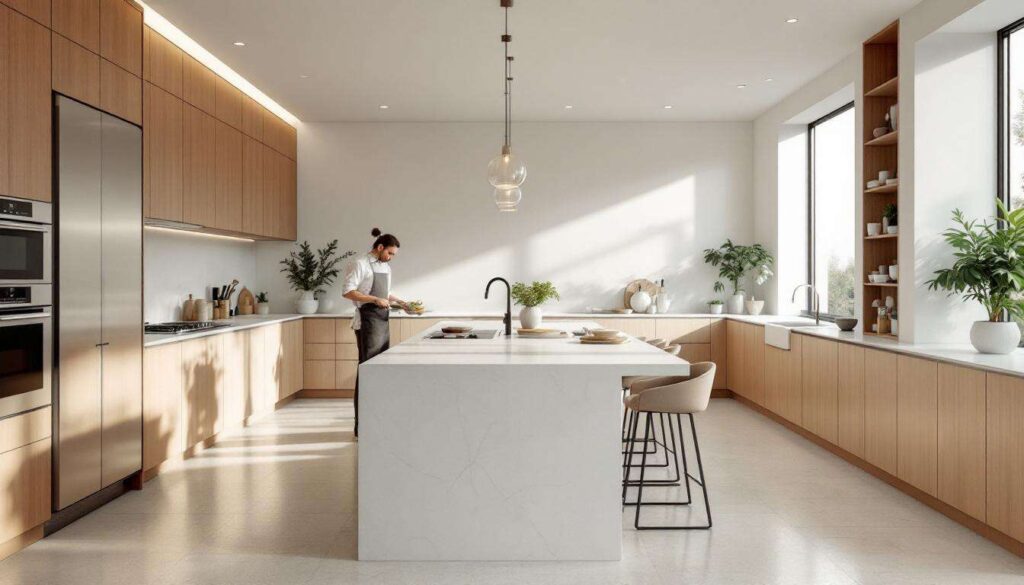
The kitchen island has long been considered the centrepiece of modern culinary spaces, but a significant shift is reshaping contemporary interior design. Freestanding kitchens are experiencing a remarkable resurgence, with designers and homeowners alike recognising their versatility, aesthetic appeal, and practical advantages. This approach, which eschews built-in structures in favour of movable, independent units, offers a fresh perspective on how we organise and experience our cooking environments. From improved workflow to enhanced visual flexibility, the freestanding kitchen represents a departure from the rigid layouts that have dominated for decades.
Kitchen trend: the emergence of freestanding kitchens
A return to traditional principles with modern sensibilities
The freestanding kitchen concept draws inspiration from historical culinary spaces where furniture-style pieces stood independently rather than being permanently affixed to walls. Contemporary designers are reinterpreting this approach with sleek materials, refined proportions, and innovative storage solutions that suit current lifestyles. Unlike the island-centric model that became ubiquitous in open-plan homes, freestanding configurations allow for greater adaptability and personalisation.
Why designers are championing this shift
Interior design professionals cite several compelling reasons for this transition:
- Flexibility to reconfigure layouts as needs evolve
- Reduced installation costs compared to bespoke fitted kitchens
- Opportunity to mix styles and periods for a curated aesthetic
- Easier renovation and updating without major construction work
- Better suited to rental properties and temporary living situations
This renewed interest reflects broader trends towards sustainable consumption and personalised interiors that reject one-size-fits-all solutions. As spatial requirements change, the ability to rearrange or replace individual components becomes increasingly valuable.
The functional benefits of a kitchen without an island
Improved circulation and workflow efficiency
Islands often create bottlenecks in smaller or medium-sized kitchens, forcing users to navigate around a central obstacle. Freestanding kitchens eliminate this impediment, allowing for unobstructed movement between key work zones. The classic kitchen triangle connecting sink, cooker, and refrigerator becomes more intuitive without a large central mass disrupting the flow.
Adaptability for different cooking styles
A freestanding arrangement accommodates various culinary approaches more effectively than fixed islands:
| Cooking style | Freestanding advantage |
|---|---|
| Solo cooking | Compact, efficient workspace without unnecessary sprawl |
| Collaborative cooking | Multiple access points without crowding around a single island |
| Entertaining | Furniture can be repositioned to create buffet or serving areas |
| Baking and preparation | Dedicated workstations can be positioned near relevant appliances |
This functional versatility extends beyond cooking itself, as freestanding pieces can serve multiple purposes throughout the day, from breakfast station to homework area to cocktail bar.
Aesthetics and design: why the freestanding kitchen appeals
Visual lightness and spatial perception
Freestanding kitchens create a sense of openness that solid islands cannot match. By maintaining clear sightlines across the room, these configurations make spaces feel larger and more connected. The varied heights of individual pieces add visual interest, whilst the gaps between units prevent the heavy, monolithic appearance of continuous cabinetry.
Character and individuality through eclectic combinations
The freestanding approach encourages mixing elements that reflect personal taste:
- Vintage dressers repurposed as storage alongside contemporary units
- Artisan-crafted wooden tables paired with industrial metal shelving
- Colourful standalone larders contrasting with neutral base cabinets
- Heirloom pieces integrated with modern appliances
This layered aesthetic creates kitchens with genuine personality rather than showroom uniformity. Designers appreciate the opportunity to curate spaces that tell stories and evolve over time, much like traditional living rooms or dining rooms.
How to integrate a freestanding kitchen in a modern space
Planning the layout for optimal functionality
Successful freestanding kitchens require thoughtful spatial planning. Begin by identifying essential zones for food preparation, cooking, cleaning, and storage. Position freestanding units to support the natural workflow between these areas whilst maintaining adequate circulation space. Most designers recommend at least 90 centimetres between major pieces to allow comfortable passage.
Balancing utilities with the freestanding concept
Plumbing and electrical requirements need not compromise the freestanding aesthetic. Modern solutions include:
- Standalone sinks with exposed pipework finished in complementary materials
- Mobile islands on lockable castors with flexible utility connections
- Concealed floor channels for discreet service routing
- Battery-powered or rechargeable appliances reducing hardwired dependencies
Working with experienced designers ensures that practical necessities enhance rather than detract from the overall composition.
Space saving and modularity: the practical advantages
Maximising efficiency in compact environments
Freestanding kitchens excel in smaller homes where every square metre counts. Unlike islands that demand substantial floor area plus surrounding clearance, modular freestanding pieces can be scaled precisely to available space. A narrow console might provide adequate preparation surface without overwhelming a modest room, whilst vertical storage units maximise capacity without expanding the footprint.
Adaptability across life stages and relocations
The portable nature of freestanding kitchens offers significant long-term value:
| Life situation | Freestanding benefit |
|---|---|
| First home | Affordable entry pieces that move to larger properties |
| Growing family | Additional units incorporated as needs expand |
| Downsizing | Excess pieces removed or repurposed in other rooms |
| Relocation | Entire kitchen transported to new residence |
This flexibility represents both financial prudence and environmental responsibility, reducing waste associated with discarding fitted kitchens during renovations or moves.
Choosing a freestanding kitchen: the designers’ perspective
Quality considerations and investment pieces
Designers emphasise selecting durable materials and solid construction when building a freestanding kitchen. Unlike fitted units hidden behind uniform facades, each piece stands independently and receives scrutiny. Investment in well-crafted furniture pays dividends through longevity and timeless appeal. Natural wood, quality metals, and stone surfaces develop attractive patinas rather than showing wear.
Coordinating elements for cohesive results
Whilst eclecticism is encouraged, successful freestanding kitchens require unifying elements:
- Consistent hardware finishes across disparate pieces
- Complementary colour palettes that harmonise without matching exactly
- Repeated materials or textures creating visual connections
- Similar proportions and scale preventing jarring contrasts
- Thoughtful negative space between units allowing each to breathe
Professional designers guide clients towards balanced compositions that feel intentional rather than haphazard, ensuring the overall effect is sophisticated and functional.
The freestanding kitchen represents a thoughtful alternative to island-dominated layouts, offering superior flexibility, distinctive aesthetics, and practical advantages that suit contemporary living. By prioritising adaptability over permanence and character over uniformity, this approach addresses both immediate needs and long-term value. As spatial constraints and lifestyle changes continue shaping residential design, the modular nature of freestanding configurations provides solutions that rigid built-in systems cannot match. Whether motivated by budget considerations, environmental consciousness, or simply the desire for a more personalised culinary space, homeowners and designers are discovering that sometimes the most innovative direction is one that looks backwards whilst moving confidently forward.