


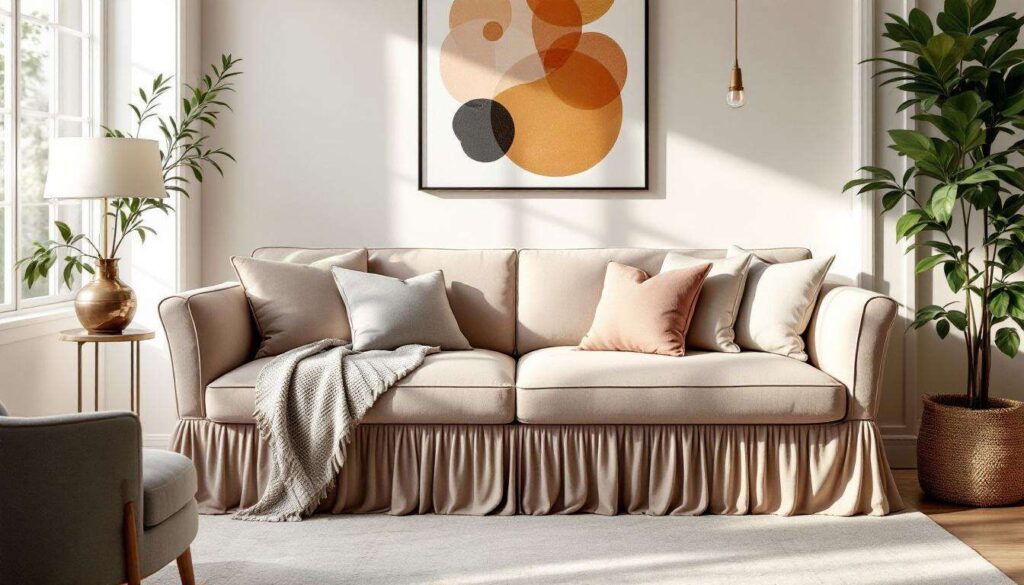
Interior design trends often cycle through periods of favour and obscurity, yet few pieces of furniture carry as much nostalgic weight as the skirted sofa. Once a staple of traditional living rooms, this distinctive style featuring fabric that cascades from the seat to the floor has re-emerged as an unexpected favourite among contemporary designers and homeowners alike. The renewed interest in skirted sofas reflects a broader shift towards comfort, elegance and individuality in home décor, challenging the minimalist aesthetic that has dominated recent years. This revival demonstrates how classic design elements can be reinterpreted for modern sensibilities, offering both practical advantages and visual appeal that resonates with those seeking to create spaces with character and warmth.
The return of the skirted sofa: a bold choice
Breaking away from minimalism
The resurgence of skirted sofas represents a deliberate departure from the clean-lined, exposed-leg furniture that has characterised interior design for the past decade. Homeowners are increasingly drawn to pieces that make a statement, and the skirted sofa delivers exactly that with its generous fabric draping and traditional silhouette. This trend signals a growing appetite for furniture that prioritises comfort and visual softness over stark geometric forms.
The appeal of hidden storage
Beyond aesthetics, skirted sofas offer practical benefits that align with contemporary living needs. The fabric skirt conceals the space beneath the sofa, which can be utilised for:
- Discreet storage of seasonal items
- Hiding unsightly furniture legs or bases
- Concealing pet beds or toys
- Creating a cleaner visual line in smaller spaces
This functional aspect makes the skirted sofa particularly attractive to those living in urban environments where space optimisation remains paramount.
A statement of individuality
Choosing a skirted sofa in today’s design landscape demonstrates confidence and a willingness to embrace personal style over prevailing trends. The piece immediately establishes a room’s character, suggesting a space that values tradition, comfort and thoughtful curation over mass-market uniformity.
Understanding the historical context of this furniture style provides insight into why it continues to captivate designers and homeowners.
The history of the skirted sofa through the decades
Victorian and Edwardian origins
The skirted sofa first gained prominence during the Victorian era, when modesty and ornamentation defined interior aesthetics. Furniture makers added fabric skirts to conceal the functional elements of seating, creating an appearance of refined elegance. These early examples featured heavy fabrics such as velvet and brocade, often with intricate pleating or gathered details that reflected the period’s taste for elaborate decoration.
Mid-century adaptations
The style evolved significantly during the mid-twentieth century, when designers simplified the skirted sofa to suit more streamlined interiors. The skirts became less ornate, often featuring simple box pleats or tailored panels that complemented the period’s emphasis on clean lines whilst maintaining a sense of traditional comfort. This iteration proved particularly popular in suburban homes, where it represented both respectability and domestic comfort.
The decline and dormancy period
By the late 1990s and early 2000s, skirted sofas fell dramatically out of favour as minimalism and industrial aesthetics dominated design conversations. Exposed wooden or metal legs became the standard, and the skirted sofa was relegated to traditional or dated interiors. This period of obscurity lasted nearly two decades, during which the style was largely dismissed by mainstream design media.
| Era | Skirt Style | Dominant Aesthetic |
|---|---|---|
| Victorian (1837-1901) | Heavy, gathered, ornate | Opulent decoration |
| Mid-century (1940s-1960s) | Tailored, box-pleated | Streamlined comfort |
| Contemporary (2020s) | Varied, customisable | Eclectic sophistication |
The visual characteristics that make skirted sofas appealing extend beyond mere nostalgia.
The aesthetic benefits of the skirted sofa
Creating visual weight and grounding
A skirted sofa provides substantial visual presence in a room, anchoring the space in a way that lighter, leg-exposed furniture cannot achieve. The continuous line from seat to floor creates a sense of permanence and stability, particularly effective in rooms with high ceilings or large windows where furniture can otherwise appear diminutive or disconnected from the architecture.
Softening hard architectural elements
The flowing fabric of a skirted sofa introduces textural contrast against hard surfaces such as wooden floors, exposed brick or concrete walls. This softening effect proves especially valuable in converted industrial spaces or modern homes with predominantly angular features, where the gentle drape of fabric provides necessary visual relief and warmth.
Versatility in fabric selection
The skirt offers an extensive canvas for expressing personal style through fabric choice. Options include:
- Linen for relaxed, coastal aesthetics
- Velvet for luxurious, dramatic interiors
- Cotton blends for practical, family-friendly spaces
- Patterned fabrics to introduce visual interest
- Contrasting skirts and cushions for layered sophistication
This customisation potential allows the skirted sofa to adapt to virtually any design scheme whilst maintaining its distinctive character.
Concealing imperfections
From a practical standpoint, the skirt disguises wear and tear that typically appears on furniture legs and bases, extending the perceived lifespan of the piece. It also hides any structural repairs or modifications, making the skirted sofa an excellent choice for vintage or restored furniture.
Professional designers have embraced this trend for reasons that extend beyond surface aesthetics.
Why designers prefer skirted sofas
Client comfort and accessibility
Interior designers report that clients find skirted sofas psychologically comforting, evoking memories of family homes and established spaces. This emotional connection makes the style particularly effective for clients seeking to create welcoming, lived-in environments rather than showroom-perfect spaces that feel impersonal or intimidating.
Problem-solving capabilities
From a technical perspective, skirted sofas solve several common design challenges. They effectively conceal:
- Uneven flooring that might cause furniture to wobble
- Electrical cables and power strips
- Pet access points to hidden spaces
- Storage solutions that would otherwise be visible
This problem-solving versatility makes the skirted sofa a practical choice for designers working with challenging spaces or client requirements.
Longevity and timelessness
Designers appreciate that well-executed skirted sofas possess enduring appeal that transcends fleeting trends. Unlike furniture that clearly dates to a specific era, a thoughtfully designed skirted sofa can remain relevant through multiple design cycles, offering clients better long-term value and reducing the need for frequent replacement.
Successfully incorporating this distinctive piece requires thoughtful consideration of existing décor elements.
How to integrate a skirted sofa into your interior
Balancing proportions
The substantial presence of a skirted sofa demands careful attention to room proportions. In smaller spaces, opt for lighter fabrics and simpler skirt styles to avoid overwhelming the room. Conversely, larger spaces can accommodate more dramatic interpretations with fuller skirts and bolder fabric choices.
Mixing traditional and contemporary elements
The most successful interiors featuring skirted sofas combine them with modern accessories and furniture. Consider pairing your skirted sofa with:
- Sleek metal or glass coffee tables
- Contemporary artwork
- Minimalist lighting fixtures
- Geometric rugs
- Mid-century accent chairs
This juxtaposition prevents the space from appearing overly traditional or dated whilst allowing the skirted sofa to serve as a distinctive focal point.
Colour coordination strategies
When selecting fabric for your skirted sofa, consider how it will interact with existing colours. Neutral tones offer maximum versatility, allowing you to update accessories and accent colours without replacing the sofa. Bold colours or patterns make stronger statements but require more careful coordination with surrounding elements.
Placement considerations
Position skirted sofas where their visual weight serves the room’s layout. They work particularly well against solid walls or as room dividers in open-plan spaces, where their substantial presence helps define distinct functional areas.
The evolving interpretation of this classic style reflects broader shifts in material preferences and pattern sensibilities.
Trending materials and patterns for 2026
Natural and sustainable fabrics
Environmental consciousness influences fabric selection, with designers increasingly specifying organic and sustainable materials. Linen, organic cotton and hemp blends dominate current specifications, offering both ecological credentials and desirable textural qualities. These natural fabrics also age gracefully, developing character rather than appearing worn.
Performance fabrics for modern living
Technological advances in textile manufacturing have produced stain-resistant and durable fabrics that maintain the appearance of natural materials whilst offering superior practicality. These performance fabrics prove especially popular with families and pet owners who previously avoided skirted sofas due to maintenance concerns.
Pattern trends
Current pattern preferences include:
- Subtle stripes that add visual interest without overwhelming
- Botanical prints reflecting biophilic design principles
- Geometric patterns in muted colour palettes
- Textured weaves that create depth through variation rather than colour
- Vintage-inspired florals reimagined in contemporary colour schemes
Customisation and artisanal details
The trend towards bespoke furniture extends to skirted sofas, with clients requesting custom pleating styles, contrasting trims and unique fabric combinations. This emphasis on individualisation reflects broader cultural shifts away from mass production towards pieces that tell personal stories and demonstrate craftsmanship.
The skirted sofa’s unexpected return demonstrates how thoughtful reinterpretation can breathe new life into traditional furniture styles. Its combination of practical benefits, aesthetic versatility and emotional resonance explains why designers and homeowners are embracing this once-dismissed piece. Whether through sustainable fabric choices, contemporary styling or creative pattern selection, the skirted sofa offers opportunities for personal expression whilst providing the comfort and functionality modern living demands. As interior design continues to value individuality over conformity, this classic piece proves that the most compelling trends often emerge from reimagining the familiar rather than pursuing the entirely new.