



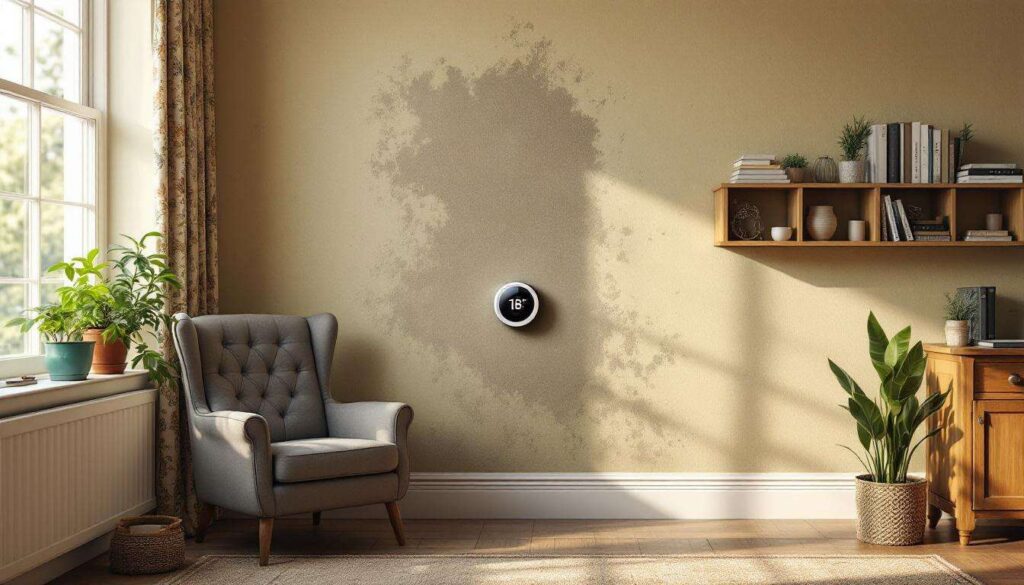
Damp patches spreading across bedroom ceilings, black spots creeping up bathroom corners, and that unmistakable musty smell that greets you each morning – these are warning signs that countless UK homeowners face during the colder months. As energy bills soar and temperatures plummet, the temptation to turn down the thermostat becomes increasingly strong. Yet this seemingly innocent cost-saving measure could be creating the perfect breeding ground for a silent intruder that threatens both your property and your health. Understanding the relationship between indoor temperature and mould growth has never been more critical, particularly as experts emphasise one simple rule that could protect your home throughout winter.
What is mould and how does it form ?
Mould represents a type of fungus that reproduces through microscopic spores floating invisibly through the air. These biological organisms exist naturally in both indoor and outdoor environments, lying dormant until they encounter the right conditions to flourish.
The perfect conditions for mould growth
Mould requires three essential elements to thrive in your home. The combination of moisture, warmth, and organic material creates an ideal environment where spores can settle and multiply rapidly. When these conditions align, particularly during winter months, mould colonies can establish themselves within 24 to 48 hours.
- Moisture levels above 60% relative humidity
- Temperatures between 15°C and 25°C
- Organic surfaces such as wallpaper, wood, or fabric
- Poor ventilation allowing stagnant air
- Inadequate heating creating cold surfaces
Common types found in UK homes
Several varieties of mould commonly appear in British properties. Aspergillus typically manifests as grey or green patches on walls and ceilings, whilst Cladosporium appears as olive-green or brown spots often found around windows. The most concerning is Stachybotrys chartarum, commonly known as black mould, which appears as dark greenish-black patches and poses significant health risks.
These various mould types share one common characteristic: they all exploit the moisture and temperature imbalances that frequently occur in poorly heated homes, making temperature control a fundamental defence strategy.
The health risks of mould
Living with mould extends far beyond aesthetic concerns or property damage. The health implications of prolonged exposure can range from mild irritation to severe respiratory conditions, particularly affecting vulnerable household members.
Immediate respiratory effects
Mould spores, when inhaled, can trigger immediate reactions in many individuals. Common symptoms include persistent coughing, wheezing, nasal congestion, and throat irritation. Those with existing respiratory conditions such as asthma may experience significantly worsened symptoms, including more frequent and severe attacks.
Long-term health consequences
Chronic exposure to mould presents more serious health challenges. Research conducted by the World Health Organisation has established links between damp, mouldy environments and various health conditions.
| Health Condition | Risk Increase | Most Affected Groups |
|---|---|---|
| Asthma development | 40% higher risk | Children under 5 |
| Respiratory infections | 50% increase | Elderly and immunocompromised |
| Allergic rhinitis | 30-50% higher | All age groups |
| Chronic bronchitis | 60% increase | Adults with existing conditions |
Beyond respiratory issues, some individuals develop allergic reactions including skin rashes, eye irritation, and in rare cases, severe allergic responses requiring medical intervention.
Understanding these health risks highlights why preventing mould growth through proper environmental control becomes not just a property maintenance issue, but a crucial health protection measure, particularly when considering the underlying causes of moisture accumulation.
Why moisture makes your walls vulnerable
Moisture accumulation on walls and surfaces creates the fundamental catalyst for mould colonisation. Understanding how this moisture forms and persists helps explain why temperature management plays such a vital role in prevention.
Condensation: the primary culprit
Condensation occurs when warm, moisture-laden air contacts cold surfaces, causing water vapour to convert into liquid droplets. During winter, external walls and windows become significantly colder than the indoor air temperature. When inadequately heated rooms contain this temperature differential, condensation inevitably forms, particularly in corners and areas with limited air circulation.
Daily household activities generate substantial moisture. A typical family produces approximately 10 to 15 litres of water vapour daily through breathing, cooking, showering, and drying clothes indoors.
Structural vulnerabilities
Certain architectural features make properties particularly susceptible to moisture problems. Solid wall construction without cavity insulation allows greater heat loss, creating colder internal surfaces. Similarly, single-glazed windows and poorly insulated lofts contribute to cold spots where condensation readily forms.
- Thermal bridges in building structure
- Inadequate or damaged damp-proof courses
- Blocked or insufficient ventilation systems
- Cold corners where two external walls meet
- Areas behind furniture against external walls
These moisture-prone areas become increasingly problematic when indoor temperatures drop below recommended levels, establishing the direct connection between heating practices and mould prevention.
The 18°C rule: why is it crucial ?
Housing experts and public health officials consistently recommend maintaining a minimum indoor temperature of 18°C throughout winter months. This specific threshold represents more than arbitrary guidance; it reflects the temperature at which condensation risk significantly decreases whilst maintaining reasonable energy consumption.
The science behind 18°C
At temperatures below 18°C, internal wall surfaces cool sufficiently to reach the dew point more readily – the temperature at which water vapour condenses into liquid. Maintaining 18°C keeps surface temperatures above this critical threshold under most humidity conditions, preventing the moisture accumulation that mould requires.
Research from the Building Research Establishment demonstrates that homes consistently heated to 18°C or above experience 75% fewer mould problems compared to properties maintained at lower temperatures.
Room-specific temperature considerations
Whilst 18°C represents the minimum baseline, different rooms benefit from varied temperature targets based on their use and moisture generation.
| Room Type | Recommended Temperature | Reasoning |
|---|---|---|
| Living areas | 20-22°C | Comfort and activity levels |
| Bedrooms | 18-20°C | Optimal sleep conditions |
| Bathrooms | 22-24°C | High moisture generation |
| Hallways | 18°C minimum | Prevent cold spots |
Economic considerations
Many homeowners question whether maintaining 18°C remains affordable given rising energy costs. However, the financial implications of mould damage often exceed the heating costs. Treating established mould, redecorating affected areas, and replacing damaged furnishings can cost thousands of pounds, whilst potential health impacts may result in lost work days and medical expenses.
Implementing this temperature rule effectively requires practical strategies that balance warmth, ventilation, and energy efficiency.
Practical tips for maintaining an adequate temperature
Achieving and sustaining the 18°C threshold throughout your home demands a strategic approach combining heating management, insulation improvements, and behavioural adjustments.
Efficient heating strategies
Rather than heating your home intermittently to high temperatures, maintaining a consistent lower temperature proves more effective for mould prevention and often more economical. Modern programmable thermostats allow you to set different temperatures for various times whilst ensuring the minimum threshold is never breached.
- Set heating to activate before outdoor temperatures drop significantly
- Maintain consistent heating rather than allowing rooms to cool completely
- Use thermostatic radiator valves to control individual room temperatures
- Ensure radiators remain unobstructed by furniture or curtains
- Bleed radiators regularly to maintain heating efficiency
Improving home insulation
Enhanced insulation reduces heat loss, making it easier and more affordable to maintain adequate temperatures. Loft insulation should ideally reach 270mm depth, whilst cavity wall insulation can reduce heat loss by up to 35%. Even simple measures like draught-proofing doors and windows contribute significantly to temperature stability.
Ventilation balance
Whilst maintaining warmth, adequate ventilation remains essential for removing moisture-laden air. Open windows briefly each day for cross-ventilation, use extractor fans during cooking and bathing, and ensure trickle vents remain open. This approach removes excess moisture without substantially cooling your home.
Moisture reduction techniques
Minimising moisture generation helps maintain the effectiveness of your heating strategy. Always use lids when cooking, dry laundry outdoors when possible, and keep bathroom doors closed during showers. These simple habits significantly reduce the moisture burden your heating system must counteract.
Implementing these practical measures not only prevents immediate mould problems but also delivers lasting advantages for your property and wellbeing.
The long-term benefits of proper temperature management
Maintaining appropriate indoor temperatures extends advantages far beyond immediate mould prevention, delivering substantial long-term returns for both property value and occupant health.
Property preservation
Consistent temperature control protects your home’s structural integrity and decorative finishes. Walls free from mould damage retain their condition, avoiding the need for repeated redecorating. Timber elements such as window frames and skirting boards remain sound rather than suffering rot from persistent dampness. This preservation maintains property value and reduces long-term maintenance costs significantly.
Health and wellbeing improvements
Families living in adequately heated homes report fewer respiratory illnesses, reduced allergy symptoms, and improved overall wellbeing. Children particularly benefit, with studies showing better concentration and academic performance in warm, dry home environments. Elderly residents face reduced risks of cold-related health complications, including cardiovascular strain and weakened immune function.
Energy efficiency gains
Paradoxically, maintaining consistent temperatures often proves more energy-efficient than allowing properties to cool then reheating them. Warm homes require less energy to maintain temperature than cold homes need to reach comfortable levels. Additionally, dry air heats more efficiently than damp air, creating a positive cycle where mould prevention supports energy economy.
Maintaining your home at or above 18°C throughout winter represents a fundamental investment in property protection and family health. The relationship between temperature, moisture, and mould growth demonstrates that adequate heating functions as preventative maintenance rather than mere comfort provision. Whilst energy costs demand careful consideration, the expenses associated with mould remediation, property damage, and health impacts substantially exceed the cost of proper heating. By implementing consistent temperature management, improving insulation, balancing ventilation, and reducing moisture generation, homeowners can effectively eliminate mould risks whilst creating healthier, more comfortable living environments that preserve both property value and occupant wellbeing for years to come.