


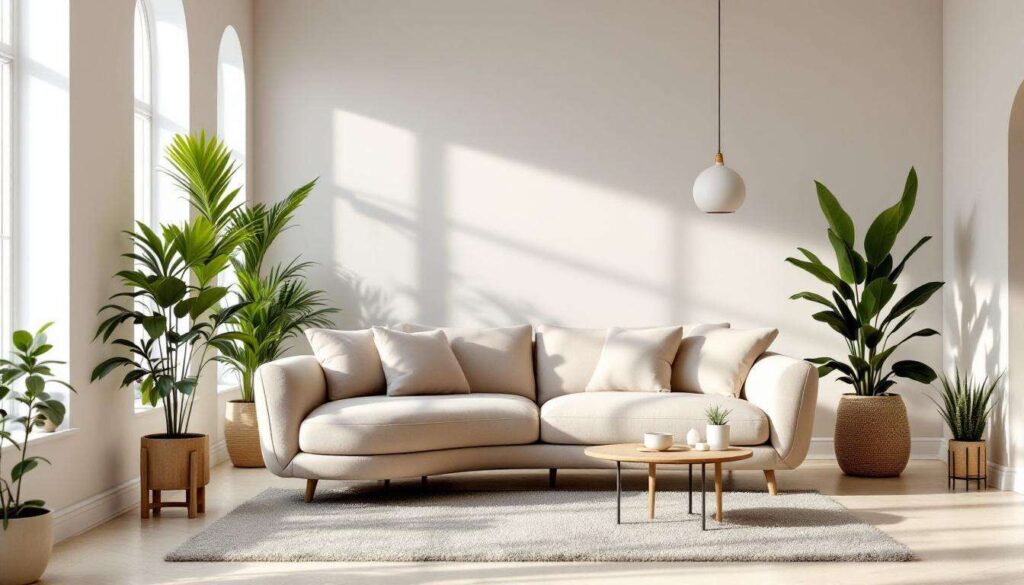
The British living room has long been a space of evolution, reflecting shifts in lifestyle, taste and design philosophy. As homeowners seek furniture that balances visual appeal with practical function, the curved sofa has emerged as a compelling choice. This sculptural seating solution offers more than just a place to sit; it represents a departure from the rigid lines that have dominated interiors for decades. With its flowing silhouette and inviting form, the curved sofa is reshaping how we think about comfort, space and style in contemporary homes.
The rise of the curved sofa: a trend in 2026
A departure from angular design
For years, straight-edged sofas and sectionals have been the default choice for British households. However, the curved sofa has steadily gained momentum, driven by a collective desire for softer, more organic forms in interior design. This shift reflects a broader movement away from minimalist austerity towards spaces that feel welcoming and human-centred.
The popularity of curved sofas can be attributed to several factors:
- Increased exposure through social media platforms showcasing aspirational interiors
- Designer collaborations with high-street retailers making the style more accessible
- A growing appreciation for mid-century modern aesthetics that emphasise fluid lines
- The influence of Scandinavian and Italian design traditions that favour rounded forms
Celebrity endorsements and media influence
Interior design programmes and influencers have played a significant role in popularising the curved sofa. High-profile renovations and styled photoshoots frequently feature these statement pieces, creating aspirational imagery that resonates with homeowners. As a result, demand has surged across both luxury and mid-market furniture retailers throughout the UK.
This growing interest in curved furniture naturally leads to questions about what makes these pieces so visually compelling in the first place.
The aesthetic benefits of rounded sofas
Sculptural presence and visual interest
A curved sofa functions as a focal point in any living room, drawing the eye with its distinctive silhouette. Unlike rectangular sofas that blend into the background, a rounded design commands attention without overwhelming the space. The graceful arc creates a sense of movement and dynamism, transforming furniture into an architectural element.
Softening harsh room layouts
Many UK homes feature boxy room proportions with sharp corners and straight walls. A curved sofa introduces visual relief by breaking up these rigid lines, creating a more balanced and harmonious environment. This softening effect is particularly valuable in:
- Open-plan living areas where zoning is needed without physical barriers
- Period properties with ornate architectural details that benefit from complementary curves
- Modern new-builds with stark geometries that require warming touches
- Small flats where visual flow prevents the space from feeling cramped
Versatility across design styles
Contrary to assumptions that curved sofas suit only specific aesthetics, these pieces adapt remarkably well to various interior styles. A velvet curved sofa in jewel tones complements Art Deco interiors, whilst a neutral linen version suits contemporary Scandinavian schemes. The form itself remains timeless, allowing homeowners to update surrounding décor without replacing the central seating.
Beyond their visual appeal, curved sofas offer tangible benefits in terms of how they feel to use daily.
Comfort and ergonomics: the secret of curved sofas
Natural body alignment and support
The curved shape of these sofas mirrors the natural contours of the human body, providing superior support compared to straight-backed alternatives. The gentle arc encourages proper posture whilst allowing for relaxed lounging, making these pieces ideal for extended periods of sitting. The continuous backrest eliminates uncomfortable gaps and provides consistent support along the entire seating area.
Enhanced social interaction
One often overlooked advantage of curved sofas is how they facilitate conversation and connection. The inward-facing design naturally positions occupants towards one another, creating a more intimate and engaging seating arrangement. This configuration proves particularly valuable for:
- Families who gather for evening entertainment and discussions
- Hosts who frequently entertain guests and value comfortable socialising
- Households where multiple generations share living spaces
- Those who prioritise face-to-face interaction over isolated screen time
Accommodating various seating preferences
The continuous curve offers multiple seating positions without defined sections or armrests that dictate where occupants must sit. This flexibility allows each person to find their preferred spot, whether they prefer corner nooks for curling up or central positions for stretching out. The absence of rigid divisions also means the sofa can accommodate varying numbers of people more gracefully than sectional alternatives.
These comfort advantages work in tandem with practical space-saving qualities that make curved sofas particularly suited to British homes.
Curved sofas: optimising space in living rooms
Efficient use of awkward corners
Many UK living rooms feature challenging layouts with bay windows, alcoves or irregular dimensions. A curved sofa can nestle into these spaces more effectively than angular furniture, maximising usable seating without blocking pathways or creating dead zones. The rounded profile allows for smoother traffic flow around the piece.
Creating defined zones in open-plan spaces
In open-plan living areas, a curved sofa serves as a natural room divider without erecting visual barriers. The arc of the sofa can delineate the sitting area from dining or kitchen zones whilst maintaining sightlines and preserving the sense of openness. This subtle zoning proves more elegant than bookcases or screens.
| Room size | Optimal curved sofa length | Recommended placement |
|---|---|---|
| Small (under 15m²) | 180-220cm | Against wall or in corner |
| Medium (15-25m²) | 220-280cm | Floating or semi-floating |
| Large (over 25m²) | 280cm+ | Centrepiece with 360° access |
Reducing visual bulk
Despite often being substantial in size, curved sofas can appear less imposing than equivalent-sized sectionals. The flowing lines create a sense of lightness, and the absence of sharp corners makes the piece feel less obtrusive. This perceptual quality makes curved sofas particularly suitable for smaller British homes where every square metre counts.
Understanding these spatial benefits helps inform how to integrate a curved sofa into broader decorating schemes.
Decor trends 2026: incorporating a curved sofa
Complementary furniture and accessories
To maximise the impact of a curved sofa, surrounding pieces should echo or contrast with its organic form. Round coffee tables, oval mirrors and circular rugs reinforce the curved aesthetic, creating a cohesive look. Alternatively, pairing the sofa with angular side tables and geometric artwork provides dynamic tension that adds visual interest.
Colour and texture considerations
The choice of upholstery significantly influences how a curved sofa integrates into existing décor. Current trends favour:
- Bouclé fabrics in neutral tones for tactile warmth and contemporary appeal
- Rich velvet in emerald, sapphire or rust for luxurious, jewel-toned schemes
- Natural linen in oatmeal or stone for relaxed, coastal-inspired interiors
- Performance fabrics in versatile greys for family-friendly durability
Lighting to enhance curved forms
Proper illumination accentuates the sculptural qualities of a curved sofa. Arc floor lamps positioned to cast light across the backrest highlight its graceful line, whilst recessed ceiling spots create subtle shadows that emphasise the three-dimensional form. Avoiding harsh overhead lighting prevents the piece from appearing flat or losing its defining contours.
With these styling principles in mind, selecting the right curved sofa requires careful consideration of practical factors.
Choosing the right rounded sofa: practical advice
Measuring your space accurately
Before purchasing, precise measurements are essential. Record not only the available floor space but also ceiling height, doorway dimensions and stairwell widths to ensure delivery is feasible. Many curved sofas arrive in sections, but some designs feature continuous frames that require careful manoeuvring.
Assessing quality and construction
The structural integrity of a curved sofa depends on robust framing and skilled upholstery. Key indicators of quality include:
- Hardwood or engineered wood frames rather than particleboard
- Eight-way hand-tied springs for superior support and longevity
- High-density foam cushions that maintain shape over time
- Double-stitched seams and reinforced stress points
- Removable, washable covers for practical maintenance
Budget considerations and value
Curved sofas span a wide price range, from affordable high-street options to bespoke designer pieces. Whilst premium models offer superior materials and craftsmanship, mid-range alternatives increasingly provide excellent value. Consider the sofa as a long-term investment; spending slightly more for quality construction often proves more economical than replacing cheaper furniture within a few years.
Testing before purchasing
Whenever possible, visit showrooms to experience the sofa firsthand. Sit in various positions, assess the firmness of cushions and evaluate the overall comfort. Pay attention to the depth of seating, the height of the backrest and whether the curve naturally accommodates your body. Online purchases should come with generous return policies to allow for in-home assessment.
The curved sofa represents more than a fleeting design trend; it embodies a thoughtful approach to creating living spaces that prioritise both beauty and function. Its sculptural presence transforms rooms into curated environments whilst offering ergonomic benefits that enhance daily comfort. The space-optimising qualities make these pieces particularly valuable in British homes where efficient use of square footage remains paramount. As interior design continues to embrace organic forms and human-centred spaces, the curved sofa stands as a worthy investment that adapts to evolving tastes. Whether chosen for its aesthetic impact, comfort advantages or practical versatility, this distinctive furniture piece offers a compelling alternative to conventional seating that enriches the home for years to come.