


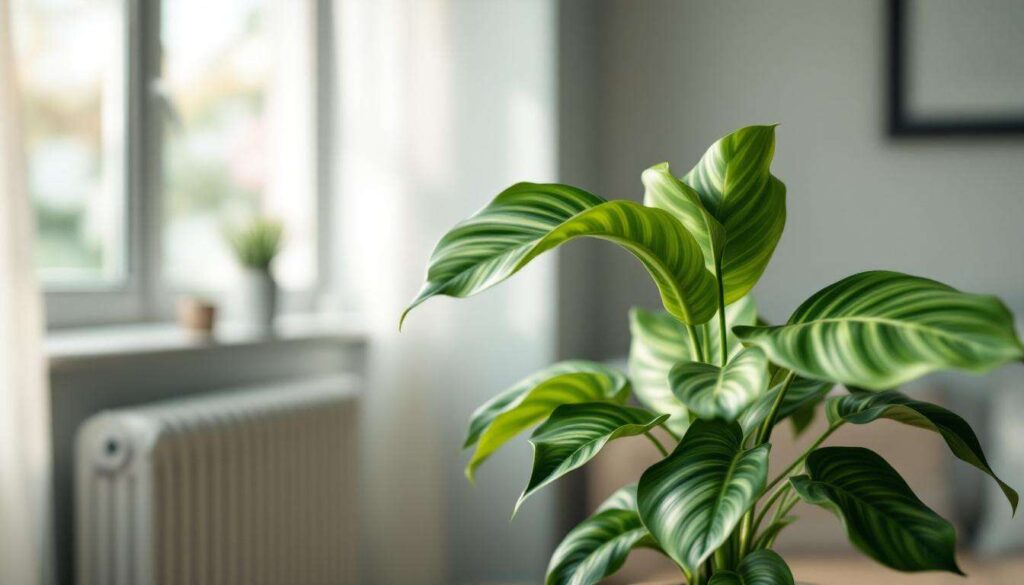
Calathea plants have earned their reputation as striking houseplants with their distinctive patterned foliage, but their beauty comes with specific requirements. When those gorgeous leaves start to curl inwards, it’s often a distress signal that shouldn’t be ignored. Many plant owners place their calatheas near radiators during colder months, unknowingly creating conditions that directly oppose what these tropical natives need to thrive. The good news is that addressing this issue doesn’t require extensive botanical knowledge or expensive equipment. Understanding the relationship between your heating system and your plant’s health is the first step towards restoring those leaves to their full, unfurled glory.
Causes of calathea leaf curling
Environmental stress factors
Calathea leaves curl as a protective mechanism when the plant experiences unfavourable conditions. This natural response helps reduce the surface area exposed to harsh elements, conserving moisture and protecting delicate leaf tissue. Several environmental factors can trigger this reaction:
- Insufficient humidity levels below 50 per cent
- Inconsistent watering patterns causing soil to dry out completely
- Exposure to direct sunlight or excessive heat
- Temperature fluctuations exceeding 5 degrees Celsius
- Poor air circulation or stagnant conditions
Physical symptoms and progression
The curling typically begins at the leaf edges, gradually progressing inwards until the entire leaf resembles a tightly rolled tube. Initially, the leaves may simply appear slightly cupped, but without intervention, they can become completely closed. Accompanying symptoms often include browning tips, crispy edges, and a general loss of the plant’s characteristic vibrant appearance. The undersides of affected leaves may show signs of moisture stress, appearing papery or discoloured compared to healthy foliage.
Identifying the root cause early prevents permanent damage and allows for swift recovery. These symptoms directly connect to how heating systems impact your plant’s immediate environment.
Influence of proximity to a radiator
Heat distribution and plant placement
Radiators create localised zones of intense dry heat that extend well beyond their immediate vicinity. The warm air rising from these heating sources carries moisture away from surrounding surfaces, including plant leaves. When a calathea sits within two metres of an active radiator, it experiences conditions comparable to a desert climate, despite being indoors. This proximity creates a microclimate fundamentally incompatible with the plant’s tropical origins.
| Distance from radiator | Typical humidity level | Impact on calathea |
|---|---|---|
| 0-50 cm | 15-25% | Severe stress, rapid curling |
| 50-150 cm | 25-35% | Moderate stress, gradual curling |
| 150-300 cm | 35-45% | Mild stress, occasional curling |
| 300+ cm | 45-55% | Minimal stress if other conditions met |
Temperature versus humidity balance
The challenge isn’t simply the warmth itself but rather the dramatic reduction in relative humidity that accompanies radiator heat. As air temperature increases, its capacity to hold moisture expands, effectively pulling water vapour from any available source, including plant tissues. A radiator operating at full capacity can reduce room humidity by 20-30 per cent within its immediate zone. This creates a constant battle for calatheas, which must work overtime to replace lost moisture through their root systems whilst simultaneously experiencing increased transpiration through their leaves.
Understanding these dynamics reveals why humidity management becomes the critical factor in calathea care, particularly during heating seasons.
Importance of humidity for calathea
Natural habitat requirements
Calatheas originate from the understorey layers of South American rainforests, where humidity levels consistently hover between 70-90 per cent. In these environments, moisture saturates the air, and leaves remain constantly hydrated without significant transpiration stress. The plants evolved with broad, thin leaves designed to capture filtered light whilst maintaining moisture balance in perpetually humid conditions. Replicating even a fraction of this environment indoors proves essential for their wellbeing.
Physiological moisture needs
These plants lack the waxy cuticle found on drought-tolerant species, making them particularly vulnerable to moisture loss through their leaf surfaces. When ambient humidity drops below 50 per cent, calatheas cannot replace lost moisture quickly enough through their roots alone. The resulting deficit triggers the curling response as the plant attempts to minimise further water loss. Prolonged exposure to low humidity doesn’t just affect appearance; it compromises the plant’s ability to photosynthesise efficiently and can lead to permanent tissue damage.
Addressing humidity concerns requires practical, sustainable solutions that fit into everyday routines without constant intervention.
Quick solutions to increase humidity
Immediate intervention methods
Several approaches can rapidly improve the moisture content in the air surrounding your calathea. A simple yet effective method involves placing a shallow tray filled with water and pebbles beneath the plant pot. As water evaporates, it creates a localised humid microclimate. Ensure the pot sits on the pebbles rather than in the water to prevent root rot. Alternatively, grouping multiple plants together creates a shared humidity zone through collective transpiration.
- Misting leaves twice daily with room-temperature water
- Using a cool-mist humidifier positioned 1-2 metres from the plant
- Placing the plant in naturally humid rooms such as bathrooms with windows
- Creating a pebble tray with 2-3 cm water depth
- Installing a small desktop fountain near plant clusters
Long-term humidity management
For sustained results, investing in a digital hygrometer allows you to monitor humidity levels accurately. Aim to maintain readings between 50-60 per cent as a minimum, with 60-70 per cent being ideal. Electric humidifiers offer the most reliable solution, particularly models with built-in humidistats that maintain consistent levels automatically. Position humidifiers to distribute moisture evenly without directing water vapour directly onto leaves, which can encourage fungal problems.
Beyond humidity adjustments, comprehensive care practices ensure your calathea remains resilient and vibrant throughout the year.
Care tips for healthy leaves
Watering protocols
Maintain consistently moist soil without allowing waterlogging. Check the top 2-3 cm of soil; when it feels dry to the touch, water thoroughly until excess drains from the bottom. Use filtered or rainwater when possible, as calatheas are sensitive to fluoride and chlorine found in tap water. During winter months, reduce watering frequency slightly but never allow the soil to dry completely. The goal is achieving a balance where roots access moisture without sitting in saturated conditions.
Light and temperature considerations
Position your calathea in bright, indirect light, avoiding direct sun exposure which can scorch leaves and exacerbate moisture loss. North or east-facing windows typically provide ideal conditions. Maintain temperatures between 18-24 degrees Celsius, avoiding placement near drafts, air conditioning vents, or heating sources. Temperature stability matters as much as the actual range; sudden fluctuations stress the plant and trigger defensive responses including leaf curling.
Feeding and maintenance schedule
Apply a diluted liquid fertiliser at half strength every four weeks during the growing season from spring through early autumn. Cease feeding during winter when growth naturally slows. Regularly wipe leaves with a damp cloth to remove dust, which blocks pores and reduces the plant’s ability to transpire efficiently. Prune any severely damaged leaves at the base to redirect energy towards healthy growth.
Even with optimal care, certain common errors can undermine your efforts and perpetuate problems with leaf curling.
Common mistakes to avoid with calathea
Overcompensation pitfalls
Many owners, upon discovering their calathea’s distress, overreact with excessive interventions. Overwatering in an attempt to address perceived drought can lead to root rot, which ironically produces similar symptoms to underwatering, including leaf curl. Similarly, moving the plant too frequently between locations prevents it from acclimating and causes additional stress. Patience proves essential; allow the plant time to respond to environmental improvements before making further adjustments.
Neglecting seasonal adjustments
Care requirements shift with the seasons, yet many plant owners maintain identical routines year-round. During winter, reduced daylight hours and lower ambient humidity from heating systems demand increased attention to moisture levels whilst simultaneously requiring less frequent watering due to slower growth. Conversely, summer may necessitate more frequent watering but potentially less supplemental humidity depending on your climate. Observing your plant’s responses and adjusting accordingly prevents recurring issues.
Ignoring early warning signs
Slight changes in leaf appearance often precede obvious curling. Leaves losing their characteristic lustre, edges appearing slightly papery, or the plant’s overall posture becoming less upright all indicate developing stress. Addressing these subtle signals immediately prevents progression to severe curling and potential permanent damage. Regular inspection, ideally weekly, allows you to catch problems early when solutions prove most effective.
Restoring a calathea with curled leaves requires understanding the plant’s fundamental needs rather than applying quick fixes. The radiator connection illustrates how modern home environments can inadvertently create hostile conditions for tropical species. By maintaining adequate humidity levels, positioning plants away from heat sources, and implementing consistent care routines, you can prevent leaf curling and encourage vibrant, healthy foliage. Remember that calatheas communicate their needs through their leaves; learning to interpret these signals transforms plant care from guesswork into informed stewardship. With attention to environmental factors and avoidance of common pitfalls, your calathea can flourish indoors, displaying the stunning foliage that makes these plants so desirable.