



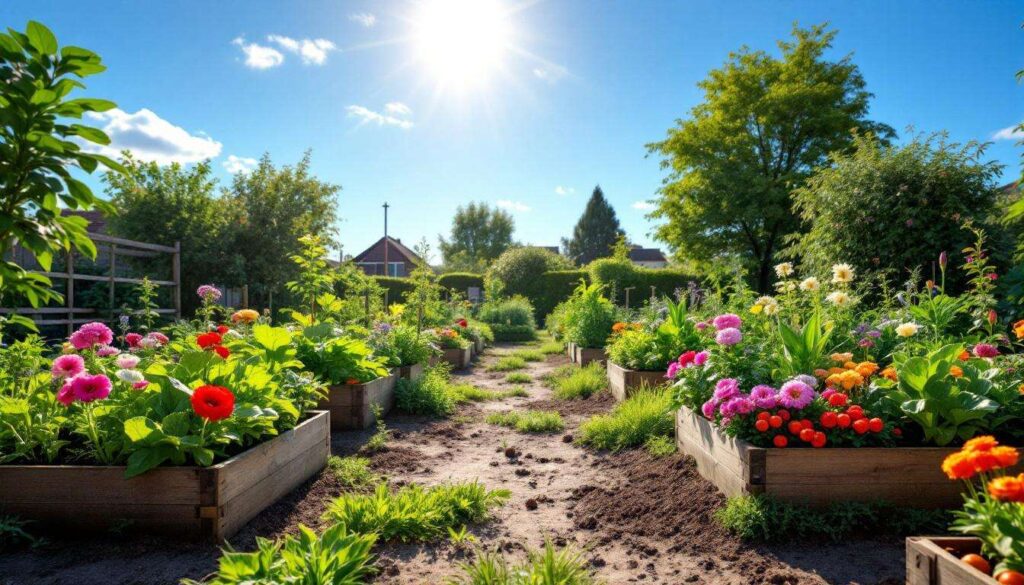
Across Britain, the demand for allotment space has reached unprecedented levels, with some councils reporting wait times stretching beyond a decade. As prospective gardeners face years on waiting lists, many are turning to innovative gardening methods that can be implemented in smaller spaces at home. Two techniques gaining particular traction are lasagna beds and no-dig plots, both offering practical solutions for those unwilling to delay their horticultural ambitions. These approaches not only circumvent the allotment shortage but also promise reduced labour, improved soil health, and environmental benefits that align with growing concerns about sustainability.
Understanding lasagna beds and no-dig plots
What defines a lasagna bed
The term lasagna bed refers to a layered gardening method that mimics the structure of the Italian dish. Gardeners construct these beds by alternating layers of carbon-rich materials such as cardboard, newspaper, and dried leaves with nitrogen-rich materials including grass clippings, kitchen scraps, and compost. This technique creates a nutrient-dense growing medium without the need for traditional tilling or soil preparation.
The layers gradually decompose, forming rich humus that supports vigorous plant growth. Typically, lasagna beds are built directly on top of existing grass or weeds, with the bottom layer of cardboard serving as a weed barrier. The process requires no heavy digging, making it accessible to gardeners with physical limitations or those working in urban spaces with limited access to equipment.
The principles behind no-dig gardening
No-dig gardening, championed by horticulturists such as Charles Dowding, operates on the principle that undisturbed soil maintains better structure and biological activity. Rather than turning the earth annually, practitioners add organic matter to the surface, allowing worms and microorganisms to incorporate it naturally.
Key advantages of this approach include:
- Preservation of soil structure and mycorrhizal networks
- Reduced weed germination from buried seeds brought to the surface
- Lower labour requirements compared to traditional digging
- Enhanced water retention in the soil profile
- Increased carbon sequestration
Both methods share philosophical common ground in their respect for natural soil processes, though lasagna beds represent a more structured approach to building growing areas from scratch whilst no-dig focuses on maintaining existing beds.
These complementary techniques have become particularly appealing as gardeners seek methods that deliver results without requiring dedicated allotment space.
The rise of UK allotment waiting lists
Current statistics on allotment availability
Data from the National Allotment Society reveals a stark imbalance between supply and demand across the United Kingdom. Metropolitan areas face the most severe shortages, with London boroughs reporting average wait times exceeding five years.
| Region | Average wait time | Number on waiting lists |
|---|---|---|
| Greater London | 5-10 years | Over 90,000 |
| South East | 3-7 years | Approximately 40,000 |
| Midlands | 2-5 years | Approximately 25,000 |
| Northern England | 1-3 years | Approximately 15,000 |
Factors contributing to increased demand
Several converging trends have intensified pressure on allotment provision. The cost-of-living crisis has motivated households to grow their own produce, whilst pandemic-era lifestyle changes sparked renewed interest in outdoor activities and self-sufficiency. Additionally, growing awareness of food miles and pesticide use has driven demand among environmentally conscious consumers.
Local authorities, meanwhile, face competing pressures on land use, with housing development often taking precedence over allotment provision. Budget constraints limit councils’ ability to create new sites, leaving waiting lists to grow unchecked.
Faced with these realities, gardeners are increasingly exploring alternatives that can be implemented without institutional support.
Benefits of no-dig techniques for gardeners
Soil health and biodiversity improvements
No-dig methods foster thriving soil ecosystems by preserving the complex networks of fungi, bacteria, and invertebrates that conventional digging disrupts. Research indicates that undisturbed soil maintains higher levels of beneficial organisms, which in turn support plant health through improved nutrient cycling and disease suppression.
The continuous addition of organic matter to the surface creates ideal conditions for earthworms, whose tunnelling action naturally aerates the soil without mechanical intervention. This biological activity produces a crumb structure that balances drainage with moisture retention.
Time and labour savings
Traditional gardening requires significant physical effort, particularly during spring preparation when beds must be dug over. No-dig approaches eliminate this annual burden, requiring only the spreading of compost or mulch across the surface.
Practical advantages include:
- Reduced time spent on bed preparation and maintenance
- Lower physical strain, making gardening accessible to older practitioners
- Fewer tools required, reducing initial investment
- Less frequent watering due to improved soil moisture retention
- Minimal weed germination, decreasing time spent on weed control
These efficiencies prove particularly valuable for gardeners managing small urban plots or balancing cultivation with demanding work schedules.
Beyond practical considerations, these techniques offer environmental advantages that resonate with contemporary concerns about sustainability.
How to create an effective lasagna bed
Materials and layering sequence
Constructing a successful lasagna bed requires careful attention to the balance between carbon and nitrogen materials. The ideal ratio approximates 30 parts carbon to 1 part nitrogen, though exact measurements are less critical than ensuring variety in materials.
Recommended materials include:
- Carbon sources: cardboard, newspaper, straw, dried leaves, wood chips, shredded paper
- Nitrogen sources: grass clippings, vegetable peelings, coffee grounds, manure, green leaves
- Finishing layer: quality compost or well-rotted manure
Begin by laying cardboard directly over grass or weeds, overlapping edges to prevent growth through gaps. Add alternating layers approximately 5-10 cm thick, watering each layer thoroughly to initiate decomposition. Conclude with a generous compost layer of at least 10 cm depth to provide immediate planting medium.
Timing and planting considerations
Autumn represents the optimal season for lasagna bed construction, allowing winter months for decomposition before spring planting. However, beds can be established at any time, with immediate planting possible in the top compost layer whilst lower layers continue breaking down.
For autumn-built beds, the settling process typically reduces height by 30-50% by spring. Gardeners should account for this compression when determining initial bed height, particularly if creating raised structures.
The environmental credentials of these methods extend beyond individual gardens to contribute to broader ecological goals.
Reducing your ecological footprint with alternative gardening
Carbon sequestration and emissions reduction
Both lasagna beds and no-dig plots contribute to carbon storage in soil rather than releasing it through disturbance. Traditional digging exposes organic matter to oxygen, accelerating decomposition and releasing carbon dioxide. Undisturbed systems, conversely, allow carbon to accumulate as stable humus.
Additionally, these methods reduce reliance on fossil fuel-intensive inputs such as peat-based compost and synthetic fertilisers. By recycling garden and kitchen waste on-site, practitioners eliminate transport emissions associated with waste removal and compost delivery.
Water conservation and chemical reduction
The improved soil structure characteristic of no-dig systems enhances water infiltration and retention, reducing irrigation requirements during dry periods. Surface mulch further minimises evaporation, creating more resilient growing conditions in the face of increasingly variable rainfall patterns.
Healthier soil ecosystems also reduce pest and disease pressure, decreasing the perceived need for chemical interventions. The diverse microbial populations in undisturbed soil actively suppress pathogenic organisms, providing natural protection for crops.
These theoretical benefits find concrete expression in the experiences of gardeners who have adopted these approaches.
Testimonials from British gardeners on new practices
Urban gardeners’ experiences
Sarah Mitchell from Bristol transformed her small courtyard using lasagna beds after spending three years on her local allotment waiting list. “I was sceptical about growing in such a confined space, but the lasagna method produced incredible results,” she reports. “Within six months, I was harvesting courgettes, tomatoes, and salad leaves. The lack of digging meant I could set everything up over a single weekend.”
James Chen in Manchester adopted no-dig techniques in his terraced house garden, noting: “The reduction in weeding alone has been transformative. I spend my gardening time actually tending plants rather than battling dandelions. My yields have increased whilst my workload has decreased.”
Suburban and rural adaptations
Emma Thompson, cultivating a quarter-acre plot in Hertfordshire, converted her entire vegetable garden to no-dig principles. “The soil quality improved dramatically within two seasons,” she observes. “I now use half the water I previously required, and my plants show greater disease resistance. The environmental benefits align perfectly with my values.”
These accounts reflect a broader shift in British gardening culture, where practical innovation meets environmental consciousness. As waiting lists continue to grow, the appeal of methods that deliver results in available spaces becomes increasingly apparent.
The convergence of allotment scarcity and innovative gardening techniques has created new possibilities for British growers. Lasagna beds and no-dig plots offer viable alternatives that require neither institutional support nor extensive space, whilst delivering environmental benefits that extend beyond individual gardens. As these methods gain adoption, they demonstrate that the barriers to productive gardening lie not in access to traditional allotments but in willingness to embrace approaches that work with natural processes rather than against them. The testimonials of practitioners across urban and rural settings confirm that these techniques deliver on their promises, providing a sustainable path forward for a new generation of gardeners.