

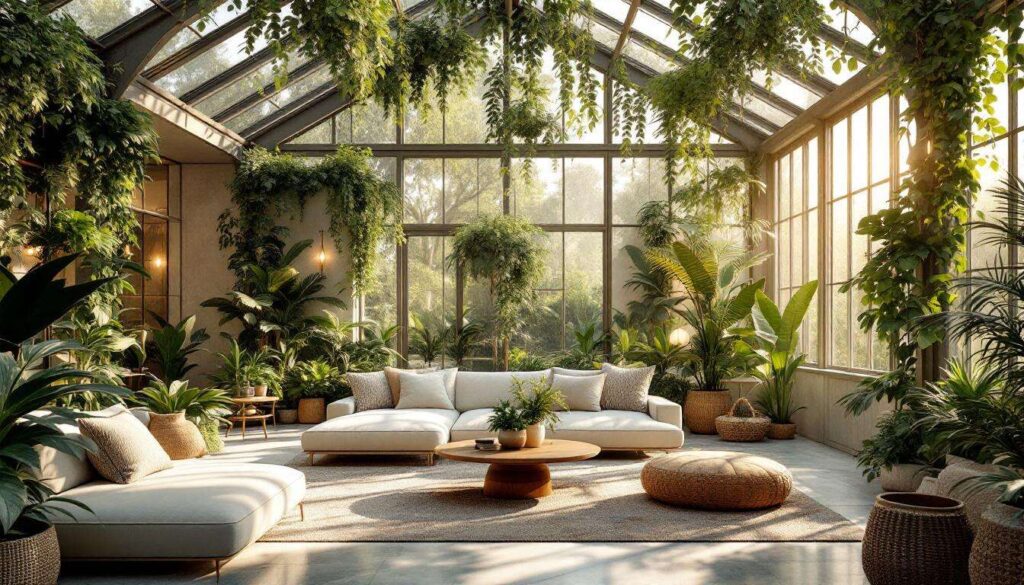
Greenhouses have long been relegated to the realm of purely functional spaces, where tomatoes ripen and seedlings take root. Yet a quiet revolution is underway amongst garden enthusiasts and interior designers alike. The concept of transforming a greenhouse into a comfortable living space has emerged as one of the most exciting decorating trends, blurring the boundaries between indoor comfort and outdoor beauty. This approach reimagines the traditional glasshouse as an extension of the home, a sanctuary where natural light floods in and greenery surrounds every corner. Whether you possess a Victorian-style structure or a modern lean-to design, the potential to create a stunning salon-serre is within reach.
La tendance déco serre : pourquoi transformer votre serre en salon ?
The appeal of biophilic design
The greenhouse-as-living-room trend taps directly into our innate desire to connect with nature. Biophilic design principles demonstrate that surrounding ourselves with plants and natural elements reduces stress, improves mood, and enhances overall wellbeing. A greenhouse offers an immersive botanical experience that standard conservatories simply cannot match, with floor-to-ceiling glass providing uninterrupted views of the garden whilst maintaining a comfortable microclimate.
Maximising underutilised space
Many gardeners find their greenhouses sit empty during certain seasons or contain only a fraction of the growing capacity. Converting this space into a multifunctional area addresses several practical considerations:
- Creates additional living space without costly home extensions
- Provides a year-round retreat regardless of weather conditions
- Maintains the structure’s original purpose whilst adding new functionality
- Increases property value through thoughtful garden features
A response to changing lifestyles
Remote working and flexible schedules have fundamentally altered how we use our homes. The greenhouse-salon offers a distinct environment for working, reading, or entertaining that feels separate from the main house yet remains easily accessible. This psychological boundary proves invaluable for maintaining work-life balance whilst enjoying the therapeutic presence of plants.
Understanding these motivations provides the foundation for making informed decisions about furniture selection and spatial planning.
Choisir le mobilier : style, confort et durabilité
Materials that withstand humidity
Greenhouse environments present unique challenges due to fluctuating humidity levels and temperature variations. Selecting appropriate materials ensures longevity:
| Material | Suitability | Maintenance level |
|---|---|---|
| Teak and eucalyptus | Excellent | Low |
| Powder-coated metal | Very good | Low |
| Rattan (synthetic) | Good | Medium |
| Untreated pine | Poor | High |
Balancing aesthetics with practicality
The most successful greenhouse salons achieve harmony between visual appeal and functional comfort. Consider pieces that serve multiple purposes: a storage bench provides seating whilst concealing gardening tools, whilst a bistro table offers a surface for morning coffee and potting activities alike. Modular furniture allows for reconfiguration as needs change throughout the seasons.
Scale and proportion considerations
Avoid overwhelming a compact greenhouse with oversized furniture. Measure your space carefully and opt for pieces with slender profiles and transparent elements like glass or acrylic that maintain sightlines. Folding chairs and nesting tables provide flexibility for entertaining without permanent spatial commitment.
With furniture foundations established, attention turns to the decorative elements that truly personalise the space.
Créer une ambiance : plantes, couleurs et accessoires
Strategic plant placement
The botanical inhabitants of your greenhouse-salon require thoughtful arrangement. Create vertical interest through hanging baskets suspended at varying heights, whilst trailing plants like pothos and string of pearls soften hard edges. Group plants with similar water and light requirements together, making maintenance more efficient whilst creating lush focal points.
Colour psychology in enclosed spaces
Whilst plants provide abundant green tones, introducing complementary colours through accessories prevents visual monotony:
- Terracotta and rust tones echo natural clay pots whilst adding warmth
- Soft blues and greys create calming, spa-like atmospheres
- Mustard and ochre inject energy without overwhelming the senses
- White and cream maximise light reflection in shadier greenhouses
Curated accessories that tell a story
Avoid cluttering surfaces with excessive ornamentation. Instead, select meaningful pieces that reflect personal interests: vintage watering cans, botanical prints in weatherproof frames, or a collection of interesting stones and driftwood. Each accessory should earn its place through either beauty or function, preferably both.
These decorative choices work in concert with thoughtful lighting strategies to establish the desired mood.
L’éclairage : optimiser la lumière naturelle et artificielle
Maximising natural illumination
The transparent nature of greenhouses provides exceptional natural light, yet strategic enhancements prevent issues. Install adjustable shading systems such as roller blinds or shade cloth to prevent overheating during summer months whilst maintaining brightness. Keep glass panels scrupulously clean, as accumulated grime significantly reduces light transmission.
Layered artificial lighting
Evening use requires carefully planned illumination that serves both human comfort and plant health. Implement a three-tier lighting approach:
- Ambient lighting through LED strips along roof beams for general visibility
- Task lighting via adjustable reading lamps for specific activities
- Accent lighting to highlight architectural features or prized specimens
Smart lighting solutions
Modern technology allows precise control over lighting schedules and intensity. Programmable systems can simulate natural daylight cycles for plants whilst providing atmospheric evening illumination for human occupants. Solar-powered options reduce running costs whilst aligning with environmentally conscious values.
Lighting establishes the visual framework, whilst textile choices introduce tactile comfort and personal expression.
Les textiles : ajouter chaleur et personnalité
Weather-resistant fabric selection
Traditional indoor textiles deteriorate rapidly in greenhouse conditions. Opt for outdoor-rated fabrics designed to withstand moisture and UV exposure. Solution-dyed acrylic, polyester blends, and treated canvas maintain colour vibrancy and resist mildew formation. These materials now come in sophisticated patterns that rival interior-grade textiles.
Cushions and throws as seasonal accents
Soft furnishings offer the easiest method to refresh the space throughout the year. Summer might feature lightweight linen-look cushions in botanical prints, whilst autumn invites chunky knit throws in warm tones. Store off-season textiles in sealed containers within the greenhouse to prevent moisture damage.
Rugs that define zones
An outdoor rug anchors seating arrangements and provides underfoot comfort on cold tiles or concrete. Choose flat-weave designs that shed dirt easily and dry quickly after cleaning. Geometric patterns add contemporary flair, whilst natural fibres like jute create organic, relaxed atmospheres.
These comfort-enhancing additions require ongoing care to maintain their appeal and functionality over time.
Astuces pour l’entretien et la durabilité de votre salon-serre
Establishing maintenance routines
Regular upkeep prevents minor issues from becoming major problems. Implement a seasonal checklist that includes inspecting seals and glazing, cleaning gutters, checking ventilation systems, and treating wooden elements with appropriate preservatives. Monthly wipe-downs of furniture prevent dirt accumulation that attracts moisture.
Climate control strategies
Maintaining comfortable temperatures requires balancing heating and ventilation. Install automatic vent openers that respond to temperature changes, preventing overheating without constant monitoring. For year-round use in colder climates, consider energy-efficient heating solutions such as:
- Electric panel heaters with thermostatic controls
- Insulated bubble wrap on north-facing panels during winter
- Thermal curtains that close overnight to retain warmth
Sustainable practices
Align your greenhouse-salon with environmental values through conscious choices. Harvest rainwater for plant irrigation, compost organic waste generated in the space, and select furniture from responsibly sourced materials. LED lighting dramatically reduces energy consumption compared to traditional bulbs whilst producing less heat.
Adapting to changing needs
The most successful greenhouse salons evolve alongside their owners. Review the space quarterly to assess what functions well and what requires adjustment. Perhaps the reading corner receives insufficient use whilst a small dining table would see constant employment. Flexibility and responsiveness ensure the space remains relevant and cherished rather than becoming a static display.
The greenhouse-as-living-room represents far more than a passing decorating fad. It embodies a thoughtful approach to connecting with nature, maximising existing resources, and creating spaces that nurture both plants and people. By selecting appropriate furniture, curating meaningful decorative elements, implementing layered lighting, incorporating weather-resistant textiles, and establishing sustainable maintenance practices, any greenhouse can transform into a stunning salon that serves as a year-round retreat. This trend acknowledges that the most beautiful gardens are those we can fully inhabit, where the boundaries between cultivation and relaxation dissolve into something altogether more enriching.