



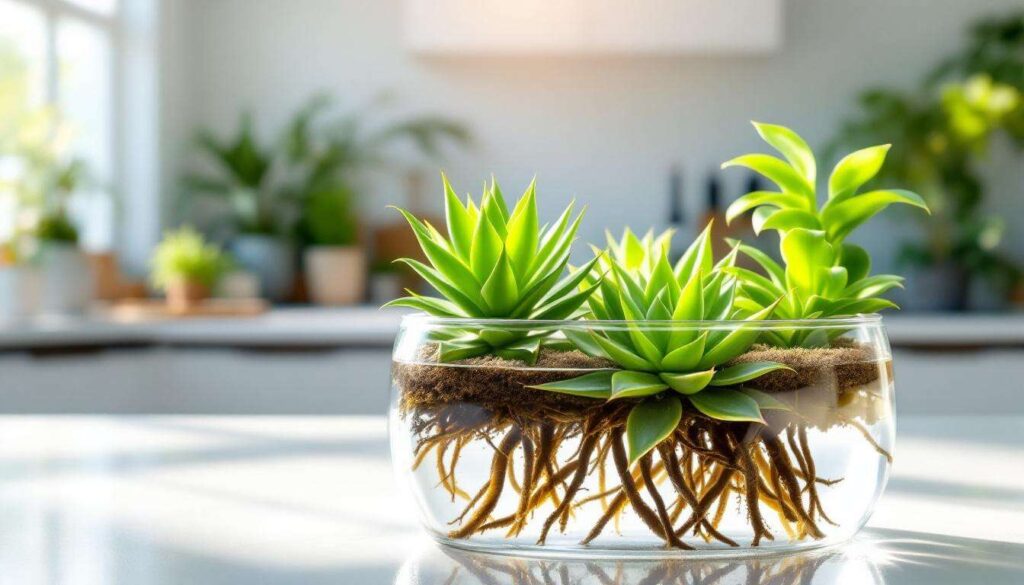
Succulents have long captivated gardeners with their sculptural forms and remarkable resilience in harsh conditions. These desert-dwelling plants store water in their fleshy leaves, stems, and roots, making them seemingly incompatible with water-based growing methods. Yet a surprising cultivation technique has emerged that challenges conventional wisdom: growing these drought-adapted plants entirely in water. This soil-free approach offers a contemporary alternative to traditional potting methods, combining aesthetics with practicality for indoor gardening enthusiasts seeking a cleaner, more visually striking way to display their botanical collections.
Introduction to hydroponic succulents
Understanding the hydroponic concept for succulents
Hydroponic cultivation represents a fundamental shift from traditional growing methods by eliminating soil entirely and providing nutrients directly through water. This technique, whilst commonly associated with vegetables and herbs, has been successfully adapted for succulent cultivation. The process involves suspending plant roots in water or a nutrient solution, allowing them to absorb moisture and essential minerals without the anchoring medium of soil. For succulents specifically, this method requires careful adaptation given their evolutionary development in arid environments where water scarcity shaped their biology.
The transition from soil to water might seem counterintuitive for plants designed to survive drought, yet succulents demonstrate remarkable adaptability when introduced gradually to aquatic environments. Their root systems can adjust to constant moisture availability, developing different structures compared to soil-grown specimens. Transparent containers showcase the developing root networks, transforming functional plant care into decorative displays that appeal to modern interior design sensibilities.
How water culture differs from traditional methods
Traditional succulent cultivation relies on porous, fast-draining soil mixtures that prevent root rot by allowing excess moisture to escape quickly. Water culture inverts this principle entirely, maintaining roots in perpetual contact with liquid whilst preventing the anaerobic conditions that cause decay. The key differences include:
- Direct nutrient delivery versus soil-mediated absorption
- Constant moisture availability rather than wet-dry cycles
- Visual root monitoring through transparent vessels
- Elimination of soil-borne pests and pathogens
- Simplified watering schedules with reduced maintenance
This fundamental change in growing environment necessitates understanding how succulents respond physiologically to continuous water access, setting the stage for exploring both benefits and challenges of this unconventional approach.
Advantages and disadvantages of water culture
Benefits of growing succulents hydroponically
Water culture offers numerous practical and aesthetic advantages that make it increasingly popular amongst indoor gardeners. The cleanliness factor ranks amongst the most appreciated benefits, as this method eliminates soil spillage, dust, and the mess associated with repotting. For urban dwellers with limited space or those maintaining plants in offices and living areas, this tidiness proves invaluable.
The visual appeal cannot be overstated. Transparent glass vessels create living sculptures that showcase both foliage and root development, adding architectural interest to interior spaces. This aesthetic quality transforms functional plant care into decorative art, particularly when multiple specimens are grouped together in coordinated containers.
| Advantage | Benefit |
|---|---|
| Reduced maintenance | Less frequent intervention required |
| Pest elimination | Soil-borne insects cannot establish |
| Root visibility | Early detection of health issues |
| Space efficiency | Compact growing without soil volume |
Additionally, water culture simplifies monitoring plant health, as root condition becomes immediately visible rather than hidden beneath soil. This transparency allows gardeners to detect problems before they become severe, potentially extending plant longevity.
Limitations and challenges to consider
Despite its advantages, water culture presents specific challenges that require acknowledgement. The most significant concern involves nutrient deficiency over extended periods. Whilst soil contains organic matter and minerals that release gradually, water provides only what is explicitly added. Without proper supplementation, succulents may exhibit stunted growth, pale colouration, or weakened structures.
Root rot remains a persistent risk, particularly during the establishment phase. Succulents evolved to tolerate dry conditions, and their roots lack the adaptations found in aquatic plants. Inadequate oxygen levels in stagnant water can quickly lead to bacterial and fungal infections that compromise plant health. Regular water changes and proper vessel selection become critical to preventing these issues.
- Limited long-term growth potential compared to soil cultivation
- Increased vigilance required for water quality maintenance
- Potential algae development in light-exposed water
- Temperature sensitivity of water-based root systems
- Dependency on supplemental nutrients for sustained health
Understanding these trade-offs helps gardeners make informed decisions about which succulents to cultivate hydroponically and how to manage their care effectively, leading naturally to the question of species selection.
Choosing the right succulents for water culture
Best species for hydroponic success
Not all succulents adapt equally well to water culture, making species selection crucial for successful outcomes. Certain varieties demonstrate superior adaptability to aquatic environments, establishing healthy root systems and maintaining vigorous growth without soil. These resilient species serve as ideal candidates for gardeners beginning their hydroponic journey.
Echeveria varieties rank amongst the most successful water-grown succulents, with their rosette formations creating stunning displays above transparent vessels. Their robust nature and willingness to root in water make them excellent starter plants. Similarly, Sedum species exhibit remarkable tolerance for hydroponic conditions, often producing extensive root networks that thrive in liquid environments.
- Echeveria: reliable rooters with attractive rosettes
- Sedum: adaptable species with vigorous growth
- Crassula (jade plants): established specimens transition well
- Haworthia: compact varieties suited to smaller vessels
- Senecio (string plants): trailing forms create dramatic displays
Varieties to avoid in water cultivation
Certain succulent types prove poorly suited to hydroponic methods, either failing to establish roots or succumbing quickly to rot. Cacti generally perform inadequately in water culture, as their highly specialised root systems require exceptional drainage and extended dry periods. Their susceptibility to moisture-related diseases makes them risky candidates for this growing method.
Thick-stemmed succulents with minimal leaf surface area often struggle in water environments. Species that store vast quantities of moisture in their bodies may not develop the root systems necessary for aquatic cultivation, instead relying on internal reserves that eventually deplete without soil contact. Recognition of these limitations prevents disappointment and plant loss, guiding attention towards proper implementation techniques.
Steps to grow succulents in water
Preparing succulents for water transition
Successfully transitioning succulents from soil to water requires careful preparation to minimise shock and encourage healthy root development. The process begins with selecting healthy specimens free from disease or pest damage, as compromised plants rarely survive the adaptation period. Mature plants with established root systems generally transition more successfully than young seedlings.
Removal from soil demands gentleness to preserve root integrity. After extracting the plant, carefully wash away all soil particles under lukewarm running water, ensuring no residue remains that could decompose and contaminate the water culture. Inspect roots thoroughly, removing any damaged, mushy, or diseased sections with sterilised scissors. Allow the cleaned plant to air dry completely for 24 to 48 hours, which permits minor wounds to callous and reduces immediate rot risk.
Setting up the water culture system
Container selection significantly influences success rates in water culture. Transparent glass vessels work best, allowing light penetration for root health whilst enabling visual monitoring. The container should support the plant with its base just touching or slightly submerged in water, preventing complete immersion which increases rot probability. Narrow-necked bottles or specialised hydroponic vessels provide ideal support structures.
Water quality matters considerably for succulent health. Use filtered or distilled water rather than tap water, which may contain chlorine, fluoride, or excessive minerals that accumulate harmfully over time. Initially, use plain water without nutrients, allowing roots to adapt to the aquatic environment before introducing supplements. Position the vessel in bright, indirect light where the succulent would thrive in traditional cultivation.
| Setup Element | Recommendation |
|---|---|
| Container type | Clear glass with narrow neck |
| Water level | Just touching root base |
| Water type | Filtered or distilled |
| Light exposure | Bright indirect sunlight |
Propagating from cuttings in water
Propagation offers an alternative entry point to water culture, often proving easier than transitioning established plants. Select healthy leaves or stem cuttings from mature succulents, ensuring clean breaks without tearing. Allow cuttings to callous for several days in a dry location, which prevents immediate water absorption that could cause rot before roots develop.
Once calloused, position cuttings above water using the container edge or a mesh support, keeping the cut surface just above the water line. This proximity encourages root development towards moisture without submersion. Roots typically emerge within two to four weeks, at which point the cutting can be lowered to allow root contact with water. This method produces plants already adapted to aquatic conditions from their earliest growth stages, leading naturally to ongoing care requirements.
Maintenance of hydroponic succulents
Water changing schedule and quality
Regular water replacement forms the cornerstone of successful hydroponic succulent care. Complete water changes should occur every one to two weeks, preventing the accumulation of salts, waste products, and potential pathogens. During changes, rinse the container thoroughly to remove any film or residue that develops on glass surfaces, which can harbour bacteria or algae.
Between full changes, monitor water levels and top up as needed with fresh filtered water. The water should remain clear and odourless; any cloudiness, discolouration, or unpleasant smell indicates problems requiring immediate attention. Temperature stability matters as well, with water maintained at room temperature to avoid shocking sensitive root systems with extreme cold or warmth.
Nutrient supplementation requirements
Unlike soil cultivation where organic matter provides ongoing nutrition, water culture requires deliberate nutrient addition to sustain plant health. After the initial establishment period of four to six weeks, introduce a diluted hydroponic fertiliser specifically formulated for succulents or cacti. Standard formulations should be reduced to one-quarter strength to prevent nutrient burn, as succulents require far less feeding than most hydroponic crops.
- Begin supplementation after root establishment
- Use succulent-specific or balanced hydroponic nutrients
- Dilute to 25% of recommended strength
- Apply during water changes for even distribution
- Monitor foliage for signs of deficiency or excess
Light and temperature considerations
Hydroponic succulents maintain the same light requirements as their soil-grown counterparts, needing bright indirect light for several hours daily. Insufficient light causes etiolation, where plants stretch towards light sources and lose their compact forms. However, direct intense sunlight can heat water excessively, cooking roots and promoting algae growth in transparent containers.
Temperature stability proves more critical in water culture than soil cultivation. Water temperature fluctuations directly affect root zones without the insulating buffer soil provides. Maintain ambient temperatures between 18°C and 24°C, avoiding placement near heating vents, air conditioning units, or draughty windows that create thermal stress. These environmental factors directly influence the types of problems gardeners may encounter.
Troubleshooting common issues with water-grown succulents
Addressing root rot and decay
Root rot represents the most frequent and serious problem in hydroponic succulent cultivation. Early signs include darkening roots, mushy textures, and foul odours emanating from the water. At first detection, remove the plant immediately, trim away all affected tissue with sterilised tools, and allow the plant to dry completely before returning to fresh water in a cleaned container.
Prevention proves more effective than treatment. Ensure adequate oxygen reaches roots by maintaining water levels that don’t completely submerge the root crown. Some gardeners add small air stones connected to aquarium pumps to oxygenate water, though this requires additional equipment. Regular water changes remain the most reliable preventative measure, removing waste products before they create anaerobic conditions conducive to rot.
Managing algae growth in containers
Algae development commonly occurs in transparent water-filled vessels exposed to light, creating green films on container walls and cloudiness in water. Whilst not directly harmful to succulents, algae compete for nutrients and oxygen whilst indicating water quality issues. Reducing light exposure to the water itself helps control growth without compromising plant lighting needs.
- Use opaque sleeves around transparent containers
- Position vessels where plant receives light but water remains shaded
- Increase water change frequency during warm periods
- Clean containers thoroughly during each water change
- Consider darker-coloured glass to limit light penetration
Resolving nutrient deficiencies
Nutrient deficiencies manifest through various symptoms including pale or yellowing leaves, stunted growth, and loss of characteristic colouration. Nitrogen deficiency causes overall yellowing, particularly in older leaves, whilst phosphorus shortage results in purplish discolouration. Potassium deficiency appears as brown leaf edges and weak stems.
Correcting deficiencies requires balanced supplementation rather than over-feeding, which creates new problems. Gradually increase nutrient concentration if deficiency symptoms appear despite regular feeding, but never exceed half-strength formulations. Some succulents naturally grow more slowly in water than soil, so patience becomes essential when distinguishing between deficiency and normal hydroponic growth rates.
Growing succulents in water through hydroponic methods offers a viable, aesthetically pleasing alternative to traditional soil cultivation. This approach provides cleanliness, visual appeal, and simplified maintenance whilst requiring attention to species selection, proper setup, and consistent care routines. Successful water culture depends on choosing adaptable varieties, maintaining water quality through regular changes, providing appropriate nutrients at reduced concentrations, and monitoring for common issues like root rot and algae. Though this method presents certain limitations compared to soil growing, particularly regarding long-term nutrient availability, it remains an excellent option for indoor gardeners seeking a modern, space-efficient way to display these remarkable desert plants.