



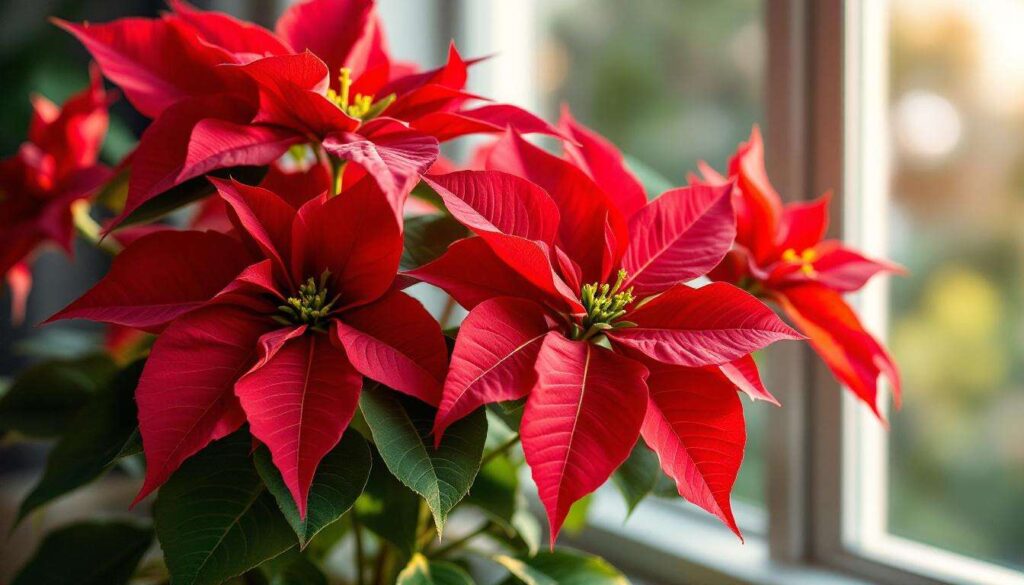
Poinsettias have become synonymous with festive cheer, their brilliant red bracts adorning homes throughout the winter season. Yet countless specimens find themselves discarded come January, their owners convinced these tropical beauties cannot survive beyond the holidays. Plant experts now reveal this need not be the case, offering straightforward guidance to extend your poinsettia’s lifespan well into the coming years. With proper attention to watering, positioning and seasonal care, these striking plants can thrive and potentially bloom again for future celebrations.
Tips for the daily care of your poinsettia
Establishing a consistent care routine
Maintaining your poinsettia requires establishing a regular care schedule that addresses its basic needs without overwhelming the plant. Daily observation proves essential, allowing you to spot potential issues before they escalate. Check the soil moisture by inserting your finger approximately two centimetres into the compost. The surface may appear dry whilst the root zone retains adequate moisture. Consistency rather than intensity defines successful poinsettia care.
Temperature and environmental stability
These tropical natives flourish within a specific temperature range. Maintain conditions between 15°C and 24°C for optimal health. Sudden temperature fluctuations cause stress, potentially triggering leaf drop and diminished vitality. Position your plant away from:
- Radiators and heating vents that create hot, dry air currents
- Draughty windows and external doors where cold air infiltrates
- Kitchen appliances generating heat and moisture fluctuations
- Air conditioning units producing cold blasts
Understanding these fundamental requirements sets the foundation for addressing more specific aspects of poinsettia maintenance.
Mistakes to avoid to ensure the poinsettia’s survival
Overwatering: the primary killer
The most common error proves to be excessive watering. Poinsettias possess sensitive root systems that quickly succumb to waterlogged conditions. Roots require oxygen as much as moisture, and saturated soil prevents adequate gas exchange. Signs of overwatering include yellowing leaves, wilting despite wet soil, and a musty odour emanating from the compost. Always ensure your container features drainage holes and never allow the pot to sit in standing water.
Environmental hazards to recognise
Several household factors threaten poinsettia health. Ethylene gas, released by ripening fruits such as apples, bananas and tomatoes, accelerates ageing in poinsettias, causing premature leaf drop. Maintain distance between your plant and fruit bowls. Additionally, avoid placing poinsettias near:
- Televisions and electronic devices generating heat
- High-traffic areas where accidental knocks occur
- Locations receiving direct sunlight through glass
- Spaces with poor air circulation
| Common Mistake | Consequence | Prevention Method |
|---|---|---|
| Overwatering | Root rot, yellowing leaves | Check soil before watering |
| Cold draughts | Leaf drop, stunted growth | Position away from doors |
| Ethylene exposure | Premature ageing | Keep away from fruit |
| Direct sunlight | Scorched, faded bracts | Provide filtered light |
Recognising these pitfalls naturally leads to understanding the precise watering technique your poinsettia requires.
How to properly water your poinsettia
Determining the correct watering schedule
Rather than adhering to a rigid timetable, water according to the plant’s actual needs. Environmental factors such as room temperature, humidity levels and pot size all influence moisture requirements. During active growth periods, your poinsettia may require watering every few days, whilst dormancy demands far less frequent irrigation. The soil surface should feel dry to the touch before you water again, yet the root ball should never become completely desiccated.
The proper watering technique
When watering becomes necessary, employ this method for optimal results:
- Remove any decorative foil or cachepot covering the drainage holes
- Water thoroughly until liquid flows freely from the bottom
- Allow excess water to drain completely for 15-20 minutes
- Discard any water remaining in saucers or outer containers
- Replace decorative coverings only after drainage completes
Room-temperature water proves preferable to cold tap water, which can shock the roots. During winter months, allowing water to stand overnight brings it to ambient temperature whilst permitting chlorine to dissipate. This attention to watering practices works in conjunction with strategic pruning for comprehensive plant health.
Pruning: an essential action for your plant’s health
Post-holiday pruning strategy
Once the festive season concludes and your poinsettia’s colourful bracts begin fading, pruning becomes crucial for encouraging future growth. Around March or April, reduce the stems to approximately 10-15 centimetres above the soil line. This drastic action may seem counterintuitive, yet it stimulates the plant to produce fresh, vigorous growth. Use clean, sharp secateurs to make cuts just above leaf nodes at a slight angle, promoting proper healing and preventing disease entry.
Ongoing maintenance pruning
Throughout the growing season, pinching back new growth encourages bushier development rather than leggy, sparse foliage. When new shoots reach 10-12 centimetres, remove the top few centimetres to promote branching. Cease this practice by early September to allow the plant adequate time to develop flowering structures. Regular removal of yellowing or damaged leaves maintains appearance and prevents potential disease spread.
Strategic pruning maximises your plant’s potential, yet its effectiveness depends heavily on where you position the poinsettia within your home.
The importance of location and light
Finding the ideal spot
Light requirements vary throughout the year, making location flexibility essential for long-term success. During active growth from spring through autumn, poinsettias require bright, indirect light for at least six hours daily. South-facing or west-facing windows with sheer curtains provide excellent conditions. Insufficient light results in pale, sparse foliage and weak stems, whilst excessive direct sun bleaches the leaves and causes scorching.
Managing photoperiod for reflowering
Achieving those spectacular coloured bracts for subsequent festive seasons requires careful light manipulation. From late September through November, poinsettias need complete darkness for 12-14 hours nightly to trigger bract colouration. This process demands dedication:
- Move the plant to a completely dark cupboard or cover with a light-proof box each evening
- Maintain this routine for eight to ten weeks without interruption
- Ensure daytime exposure provides bright, indirect light
- Even brief light exposure during dark periods disrupts the process
Proper positioning and light management create optimal conditions, yet these efforts require support through appropriate nutritional supplementation.
Fertilisation: how to nourish your poinsettia throughout the year
Seasonal feeding requirements
Poinsettias demonstrate varying nutritional needs corresponding to their growth cycles. Following the post-Christmas rest period and spring repotting, resume feeding as new growth emerges, typically around May. Employ a balanced, water-soluble fertiliser diluted to half the recommended strength every two weeks throughout the growing season. Excessive fertilisation causes salt accumulation in the compost, damaging roots and creating leaf burn.
Adjusting nutrition for flowering
As autumn approaches and you begin the darkness regime for bract development, modify your feeding strategy. Switch to a fertiliser with reduced nitrogen and increased phosphorus to support flowering rather than leafy growth. Cease all fertilisation once the bracts achieve full colour, as the plant enters a semi-dormant state requiring minimal nutrients. Resume feeding only when active growth recommences the following spring.
| Season | Feeding Frequency | Fertiliser Type |
|---|---|---|
| January-March | None | Rest period |
| April-August | Every 2 weeks | Balanced NPK |
| September-November | Weekly | Low nitrogen, high phosphorus |
| December | None | Display period |
Successfully maintaining a poinsettia beyond the festive season requires commitment to these fundamental principles. By establishing consistent care routines, avoiding common pitfalls, mastering proper watering techniques, implementing strategic pruning, optimising light exposure and providing appropriate nutrition, your poinsettia can flourish for years. The vibrant display gracing your home this season need not be temporary. With patience and attention to these expert recommendations, you can cultivate a thriving specimen that rewards your efforts with spectacular colour year after year, transforming a seasonal decoration into a lasting horticultural achievement.