



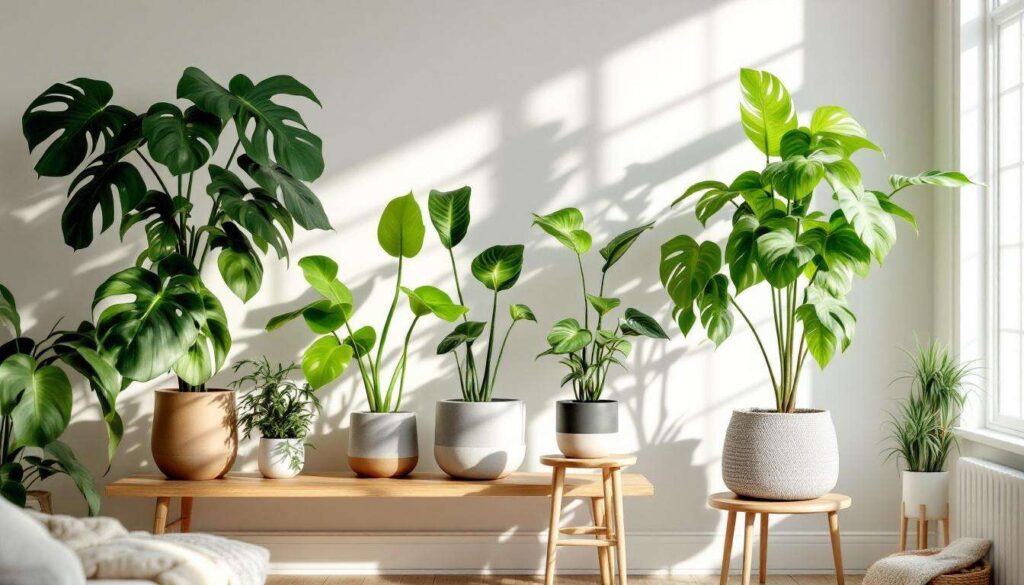
Houseplants have become essential elements of modern interior design, transforming living spaces into vibrant sanctuaries. Yet many plant enthusiasts overlook a crucial aspect: certain species flourish remarkably well when grown alongside compatible companions. These strategic pairings create microclimates that benefit both plants whilst delivering stunning visual impact. Understanding which varieties complement each other opens up exciting possibilities for creating thriving indoor gardens that require less intervention and produce more impressive results.
Create a tropical atmosphere with indoor plants
Monstera and philodendron: the perfect jungle duo
The monstera deliciosa and various philodendron species form an outstanding partnership for recreating tropical rainforest conditions indoors. Both plants originate from similar Central and South American habitats, sharing fundamental requirements that make their cohabitation remarkably successful. These climbing plants appreciate:
- Moderate to low indirect light conditions
- Consistently moist but well-draining soil
- High humidity levels between 60-80%
- Warm temperatures ranging from 18-27°C
Maintaining your tropical pairing
When positioning these plants together, consider placing them near a north or east-facing window where they receive gentle morning light without harsh afternoon exposure. The monstera’s large fenestrated leaves create a canopy effect that naturally protects the philodendron beneath, mimicking their native forest floor arrangement. Regular misting benefits both species, whilst their similar watering schedules simplify maintenance routines considerably. A moisture metre proves invaluable for monitoring soil conditions, ensuring neither plant experiences root rot from overwatering.
| Plant characteristic | Monstera deliciosa | Philodendron varieties |
|---|---|---|
| Growth rate | Moderate to fast | Moderate to fast |
| Light requirements | Bright indirect | Low to bright indirect |
| Watering frequency | Weekly | Weekly |
This tropical combination naturally leads to exploring plant partnerships suited to entirely different environmental conditions.
Desert climate plant combinations
Succulents and cacti: thriving in arid conditions
For those seeking low-maintenance options, pairing echeveria with small barrel cacti creates a stunning desert tableau. These drought-tolerant specimens share crucial requirements that make their partnership exceptionally practical. Both plants demand excellent drainage and infrequent watering, thriving in conditions that would prove fatal to moisture-loving varieties. Their complementary forms provide textural contrast: the rosette-shaped succulents soften the architectural spines of cacti.
Optimising care for desert pairings
Position these plants in the brightest location available, ideally a south-facing windowsill where they receive at least six hours of direct sunlight daily. Use a specialised cactus compost mixed with additional grit or perlite to ensure rapid drainage. During growing season, water only when the soil has completely dried, typically every two to three weeks. In winter, reduce watering to monthly intervals as plants enter dormancy.
- Terracotta pots enhance drainage and prevent waterlogging
- Bottom watering prevents rot on succulent leaves
- Minimal fertilisation during spring and summer months
- Adequate air circulation prevents fungal issues
Understanding these resilient partnerships naturally transitions into exploring other robust combinations that simplify plant care.
Simplify maintenance with resilient plants
Pothos and aglaonema: the forgiving pair
The combination of pothos (devil’s ivy) and aglaonema (Chinese evergreen) represents perhaps the most foolproof pairing for novice gardeners. Both species demonstrate remarkable adaptability to varying conditions, tolerating occasional neglect whilst maintaining attractive foliage. These plants share similar care requirements yet offer contrasting visual characteristics that create depth and interest.
Benefits beyond aesthetics
Both varieties rank highly for air purification capabilities, actively removing volatile organic compounds from indoor environments. Research has demonstrated their effectiveness in filtering benzene, formaldehyde, and trichloroethylene from surrounding air. Their trailing and upright growth habits respectively allow creative arrangements: pothos cascading from elevated positions whilst aglaonema provides structured focal points below.
| Care aspect | Pothos | Aglaonema |
|---|---|---|
| Light tolerance | Low to bright indirect | Low to medium indirect |
| Water needs | Moderate | Moderate |
| Toxicity | Toxic to pets | Toxic to pets |
These practical considerations extend beautifully into arrangements designed specifically for visual impact.
Add colour to your interior
Satin pothos and peperomia: textural brilliance
For those prioritising decorative appeal, pairing satin pothos with variegated peperomia varieties creates extraordinary visual drama. The silvery splashed leaves of satin pothos contrast magnificently with peperomia’s rippled, striped, or spotted foliage. This combination transforms mundane corners into captivating botanical displays that command attention.
Maximising visual impact
Both plants appreciate similar conditions: bright indirect light that enhances their variegation, moderate watering, and well-draining soil. However, their distinct growth patterns allow creative layering. Position peperomia in the foreground where its compact form remains visible, whilst satin pothos trails behind, creating depth. Rotate plants regularly to ensure even growth and maintain symmetrical appearances.
- Choose complementary pot colours that enhance foliage tones
- Group odd numbers of plants for balanced compositions
- Prune regularly to maintain desired shapes
- Consider decorative moss or pebbles as top dressing
These aesthetic principles apply equally when considering plants for specific rooms throughout your home.
Pair plants for every room
Bathroom combinations: ferns and peace lilies
Bathrooms provide ideal conditions for humidity-loving species such as Boston ferns paired with peace lilies. Steam from showers creates the moist atmosphere these plants crave, reducing the need for manual misting. Both species tolerate lower light levels common in bathrooms whilst effectively absorbing excess moisture that might otherwise promote mould growth.
Kitchen arrangements: herbs and spider plants
Functional yet attractive, combining culinary herbs with spider plants brings life to kitchen spaces. The spider plant’s air-purifying qualities complement fresh herbs, creating a healthier cooking environment. Position them near windows where herbs receive adequate light for flavour development, whilst spider plants tolerate the fluctuating temperatures typical of busy kitchens.
These room-specific strategies naturally extend into more adventurous exotic combinations.
Exotic blends for a unique décor
Calathea and maranta: prayer plant perfection
For sophisticated interiors, pairing various calathea species with maranta (prayer plants) creates extraordinary visual theatre. Both belong to the Marantaceae family, sharing cultural requirements whilst offering diverse leaf patterns and colours. Their distinctive characteristic of raising leaves at night adds dynamic movement to static displays, earning their collective nickname as prayer plants.
Advanced care considerations
These plants demand more attention than beginner-friendly varieties, requiring consistent humidity, filtered water free from chemicals, and protection from temperature fluctuations. However, their stunning foliage rewards dedicated care with unparalleled beauty. Group multiple varieties together to create humidity microclimates that benefit all specimens.
- Use distilled or rainwater to prevent leaf browning
- Maintain temperatures above 15°C consistently
- Provide pebble trays or humidifiers for adequate moisture
- Shield from draughts and heating vents
Strategic houseplant pairings transform ordinary spaces into thriving indoor gardens that require less maintenance whilst delivering superior aesthetic results. Whether recreating tropical jungles with monstera and philodendron, establishing desert landscapes with succulents and cacti, or adding dramatic colour through textural combinations, compatible plant partnerships enhance both plant health and interior design. By matching species with similar light, water, and humidity requirements, gardeners simplify care routines whilst maximising visual impact. These thoughtful combinations prove that successful indoor gardening extends beyond individual plant selection to understanding how different species complement and support each other within shared environments.