



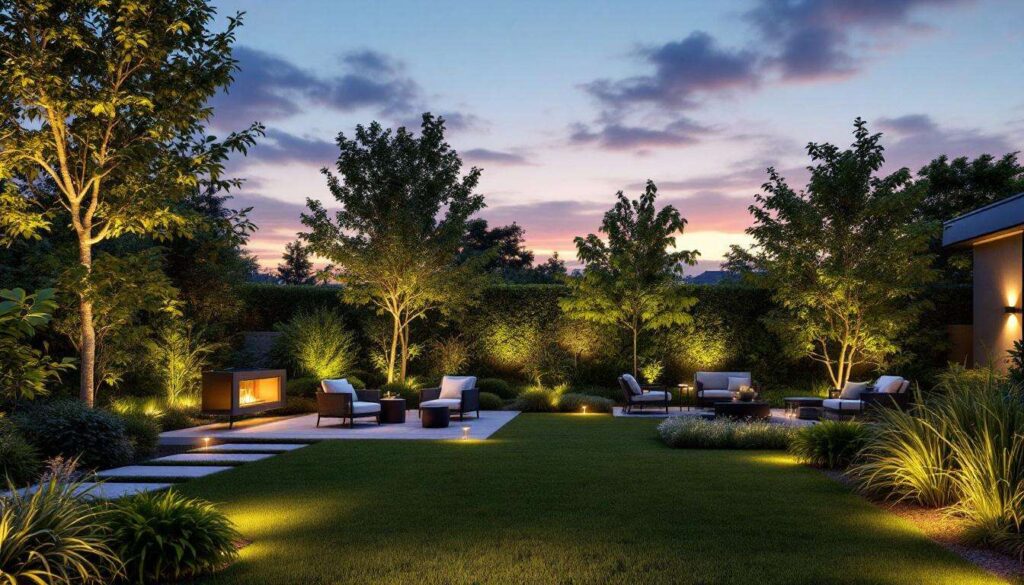
Garden lighting has long been a cornerstone of outdoor design, transforming spaces into enchanting evening retreats. However, as we move towards a new era of sustainable living and technological advancement, many traditional lighting choices are beginning to reveal their limitations. From energy-hungry bulbs to installations that disrupt local ecosystems, the time has come to reassess what truly belongs in a contemporary garden. Understanding which trends to abandon and which innovations to embrace will help create outdoor spaces that balance beauty, functionality, and environmental responsibility.
Goodbye string lights: why they make your garden look dated
The decline of festoon lighting
String lights, particularly those festoon-style bulbs that dominated outdoor entertaining spaces, have become ubiquitous to the point of cliché. What once felt charming and whimsical now appears overused and lacking in originality. These installations often feature Edison-style bulbs that, whilst aesthetically pleasing in their simplicity, offer poor energy efficiency and contribute to unnecessary electricity consumption. The exposed filament design, once considered trendy, now signals a reluctance to move beyond dated industrial aesthetics.
Problems with traditional string installations
Beyond their aesthetic staleness, string lights present several practical challenges:
- Complex wiring requirements that necessitate professional installation or unsightly cable management
- High maintenance costs due to frequent bulb replacements
- Limited flexibility in repositioning once installed
- Vulnerability to weather damage, particularly in exposed locations
- Excessive light output that can create unwanted glare and light pollution
The environmental impact of these installations cannot be ignored. Incandescent bulbs waste significant energy as heat, whilst their constant illumination throughout evening hours disrupts the natural rhythms of nocturnal wildlife. Gardens should provide sanctuary for local ecosystems, not compromise their delicate balance with inappropriate lighting choices.
Moving beyond the bistro aesthetic
The proliferation of string lights has created a homogenised outdoor aesthetic that fails to reflect individual style or garden character. Every patio now resembles a continental café, regardless of whether this suits the property’s architecture or the homeowner’s preferences. This one-size-fits-all approach to garden lighting demonstrates a lack of imagination and fails to utilise the diverse range of modern alternatives available. The shift away from string lights opens possibilities for more sophisticated and personalised lighting schemes.
As gardens evolve to reflect contemporary values and technological possibilities, the limitations of traditional string lighting become increasingly apparent, paving the way for more innovative solutions.
Solar lights: the modern and sustainable alternative
Harnessing renewable energy
Solar-powered lighting represents one of the most significant advances in garden illumination. These systems eliminate the need for complex electrical installations, drawing power directly from sunlight collected throughout the day. Modern solar technology has overcome earlier limitations, with improved battery capacity ensuring reliable illumination throughout the night. The environmental credentials of solar lighting align perfectly with growing awareness of sustainability, reducing both carbon footprint and energy bills simultaneously.
Installation flexibility and versatility
The wireless nature of solar lighting offers unprecedented freedom in garden design. Without cables to conceal or electrical points to consider, these fixtures can be positioned precisely where needed and relocated seasonally as planting schemes evolve. This adaptability proves particularly valuable for:
- Highlighting seasonal displays and flowering plants
- Illuminating pathways that change with garden development
- Creating temporary lighting effects for special occasions
- Experimenting with different lighting schemes without commitment
Technological improvements in solar efficiency
Contemporary solar lighting bears little resemblance to the dim, unreliable products of previous generations. Advanced photovoltaic cells now capture energy more efficiently, whilst improved LED technology provides brighter, more consistent illumination. Many systems incorporate intelligent sensors that adjust brightness based on ambient light levels, conserving battery power whilst maintaining optimal visibility. The combination of sustainability and performance makes solar lighting an increasingly compelling choice for environmentally conscious homeowners.
| Feature | Traditional Wired | Modern Solar |
|---|---|---|
| Installation cost | £500-£2,000 | £100-£500 |
| Annual running cost | £50-£150 | £0 |
| Installation time | 1-3 days | 1-2 hours |
| Maintenance frequency | Annual | Minimal |
The evolution of solar technology naturally leads to consideration of other technological advances transforming garden lighting.
Smart lighting: a high-tech solution for 2026
Automated control systems
Smart lighting technology brings unprecedented control to outdoor illumination. These systems connect to home networks, allowing remote management through smartphone applications. Homeowners can adjust brightness, set schedules, and create custom lighting scenes without leaving the comfort of their homes. This convenience extends beyond mere luxury, offering practical benefits including enhanced security through programmable patterns that simulate presence during absences.
Integration with home ecosystems
Modern smart lighting integrates seamlessly with broader home automation systems. Voice-activated controls through digital assistants enable hands-free operation, whilst motion sensors can trigger illumination only when needed, conserving energy and reducing light pollution. The ability to synchronise garden lighting with indoor systems creates cohesive environments that respond intelligently to household routines and preferences.
Energy monitoring and optimisation
Smart systems provide detailed insights into energy consumption, highlighting opportunities for efficiency improvements. Real-time monitoring reveals which fixtures consume excessive power, enabling informed decisions about upgrades or adjustments. Some advanced systems employ adaptive algorithms that learn usage patterns and automatically optimise settings to balance illumination needs with energy conservation. This data-driven approach to lighting management represents a significant departure from the set-and-forget mentality of traditional installations.
Whilst technology offers sophisticated control, the physical design of lighting fixtures remains equally important in creating elegant outdoor spaces.
Stake lights: a must for elegant gardens
Subtle illumination with maximum impact
Stake lights offer refined illumination that enhances rather than dominates garden landscapes. These ground-level fixtures direct light precisely where needed, creating pools of illumination that highlight specific features whilst maintaining overall ambience. Unlike overhead installations that flood spaces with uniform brightness, stake lights introduce depth and dimension, casting subtle shadows that add visual interest and emphasise garden architecture.
Strategic placement for architectural effect
The effectiveness of stake lighting depends heavily on thoughtful positioning. Key applications include:
- Uplighting specimen trees to reveal branch structure and foliage texture
- Border illumination that defines garden boundaries without harsh demarcation
- Pathway marking that guides movement whilst preserving night vision
- Feature highlighting for sculptures, water features, or architectural elements
- Layered lighting that creates depth through varied heights and intensities
Design considerations for contemporary aesthetics
Modern stake lights embrace minimalist design principles that allow them to recede during daylight hours whilst performing effectively after dark. Materials such as brushed stainless steel, powder-coated aluminium, and weather-resistant composites offer durability without visual intrusion. The best designs balance functional requirements with aesthetic discretion, ensuring fixtures complement rather than compete with surrounding plantings and hardscaping.
Beyond positioning and fixture design, the quality of light itself plays a crucial role in creating atmospheric outdoor spaces.
Play with colours: ambiences suited to each season
Understanding colour temperature
The colour temperature of lighting dramatically influences garden atmosphere. Measured in Kelvin, this characteristic determines whether light appears warm and inviting or cool and clinical. Traditional recommendations favour temperatures below 2700 Kelvin for outdoor spaces, producing amber-toned illumination that complements natural materials and foliage whilst minimising disruption to biological rhythms. However, contemporary approaches recognise that varied colour temperatures can enhance different garden areas and seasonal conditions.
Seasonal colour adjustments
Adapting lighting colour throughout the year creates dynamic outdoor environments that respond to changing conditions:
- Spring: soft white tones (3000K) that complement fresh growth and flowering bulbs
- Summer: warm amber (2700K) for relaxed evening entertaining and dining
- Autumn: rich golden hues (2200K) that enhance russet foliage and harvest colours
- Winter: subtle blue-white accents (3500K) for frost and evergreen displays
Coloured accent lighting
RGB lighting systems enable dramatic colour effects for special occasions whilst maintaining subtlety for everyday use. These versatile fixtures can highlight seasonal features, create festive atmospheres, or simply add visual interest to water features and architectural elements. The key lies in restraint: effective colour lighting enhances specific features rather than overwhelming entire spaces with garish illumination.
The interplay between light colour and physical materials creates the final layer of sophisticated garden lighting design.
Trendy materials and finishes for a cutting-edge garden
Organic forms and natural materials
Contemporary lighting design increasingly embraces organic aesthetics that harmonise with garden environments. Blown glass fixtures in irregular shapes mimic natural forms, whilst materials such as weathered copper, reclaimed wood, and natural stone integrate seamlessly into planting schemes. These designs reject the harsh geometry of industrial-style fittings, instead offering sculptural elements that contribute to garden beauty even when unlit.
Sustainable material choices
Environmental consciousness extends beyond energy efficiency to encompass the materials from which fixtures are constructed. Recycled metals, responsibly sourced timber, and biodegradable composites represent the future of garden lighting manufacture. These materials offer durability and weather resistance whilst minimising environmental impact throughout their lifecycle. The shift towards sustainability reflects broader changes in consumer values and manufacturing practices.
Finishes that age gracefully
Rather than resisting the effects of weather, modern fixtures embrace natural patination that adds character over time. Untreated copper develops verdigris that complements foliage tones, whilst weathered steel acquires rustic texture that enhances cottage garden aesthetics. These living finishes evolve alongside plantings, creating cohesive landscapes that improve with age rather than requiring constant maintenance to preserve pristine appearance.
Garden lighting stands at the intersection of technological innovation, environmental responsibility, and aesthetic evolution. The trends dominating recent years have revealed their limitations, from the energy waste of incandescent bulbs to the ecological disruption caused by excessive illumination. Moving forward requires embracing solutions that balance practical functionality with sustainability and visual appeal. Solar technology eliminates installation complexity whilst reducing environmental impact, smart systems offer unprecedented control and efficiency, and thoughtfully designed fixtures create sophisticated illumination that enhances rather than overwhelms outdoor spaces. By abandoning dated approaches and adopting contemporary alternatives, gardens can become spaces that shine beautifully whilst respecting both ecological systems and evolving design sensibilities.