



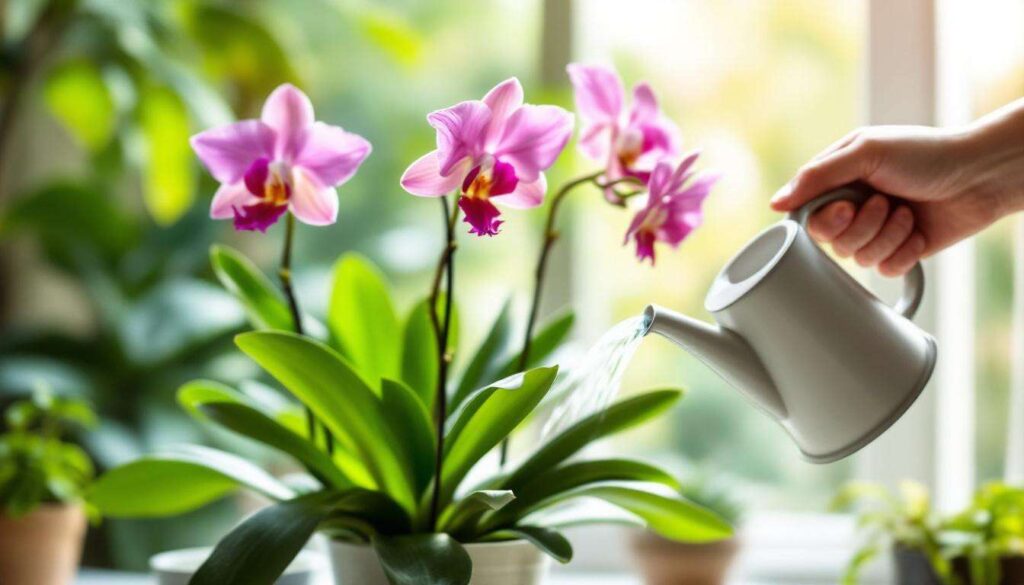
Orchids captivate gardeners with their delicate blooms and exotic appearance, yet their care often intimidates newcomers. These tropical plants possess unique watering needs that differ significantly from conventional houseplants. Understanding proper hydration techniques transforms orchid cultivation from a daunting challenge into a rewarding experience. The key lies in mastering proven methods that respect the plant’s natural habitat whilst adapting to domestic environments.
Basic techniques for watering an orchid
The sink method for thorough hydration
The sink method stands as one of the most effective approaches for ensuring orchids receive adequate moisture. This technique involves placing the entire pot in a basin or sink filled with lukewarm water, allowing the plant to soak for approximately 15 to 30 minutes. During this period, the roots absorb water naturally through the drainage holes, mimicking the way orchids drink in their native tropical environments.
After soaking, the critical step involves draining excess water completely. Lift the pot and allow it to drain thoroughly for several minutes before returning the orchid to its decorative container. This prevents water accumulation at the base, which could lead to root rot.
The watering can approach for controlled irrigation
Using a watering can offers precise control over water distribution. This method suits gardeners who prefer a hands-on approach to plant care. The technique requires pouring lukewarm water directly onto the growing medium, ensuring even coverage across the surface.
- Direct water around the roots rather than onto leaves or flowers
- Continue until water flows freely through drainage holes
- Empty any water collected in the saucer beneath the pot
- Maintain consistent water temperature to avoid shocking the plant
The ice cube method for gradual moisture release
The ice cube method has gained considerable attention amongst beginner orchid enthusiasts. This approach involves placing two or three ice cubes on the growing medium surface. As the ice melts slowly, it provides gradual hydration without overwhelming the roots. However, controversy surrounds this technique, particularly for temperature-sensitive varieties such as Paphiopedilum, which may react negatively to cold exposure.
| Method | Duration | Frequency | Best for |
|---|---|---|---|
| Sink soaking | 15-30 minutes | Weekly | Phalaenopsis, Cattleya |
| Watering can | Until drainage | 1-2 times weekly | Most varieties |
| Ice cubes | Gradual melt | 2-3 cubes weekly | Beginners, small pots |
Each watering technique offers distinct advantages, yet success depends largely on understanding individual plant requirements and environmental conditions.
Common mistakes to avoid when watering
Overwatering and its devastating consequences
Excessive watering represents the primary cause of orchid mortality amongst home gardeners. When roots remain constantly saturated, they cannot access the oxygen necessary for survival. This leads to root rot, a condition characterised by brown, mushy roots that can no longer support the plant. The symptoms often appear gradually, with yellowing leaves and wilting stems indicating underlying problems.
Ignoring the growing medium condition
Many orchid owners water according to a rigid schedule rather than assessing actual plant needs. The growing medium provides crucial clues about hydration requirements. A slightly dry substrate indicates readiness for watering, whilst heavy, waterlogged bark suggests excess moisture. Inserting a finger into the medium or lifting the pot to gauge weight offers reliable indicators of moisture levels.
Using inappropriate water temperature
Temperature shock damages orchid roots and disrupts their growth cycle. Cold water constricts root tissues, whilst excessively hot water can scald delicate structures. Lukewarm water, approximately room temperature, ensures comfortable absorption without stress to the plant.
- Avoid watering with water straight from the tap in winter
- Let water stand for several hours to reach ambient temperature
- Test water temperature before application
- Consider the plant’s natural tropical origins when selecting water temperature
Recognising these pitfalls enables gardeners to develop more intuitive watering practices that respond to their orchid’s actual needs.
Expert tips for winter orchid watering
Adjusting frequency during dormant periods
Winter brings significant changes to orchid watering requirements. Reduced light levels and cooler temperatures slow plant metabolism, decreasing water consumption. During these months, orchids typically require watering approximately once weekly, compared to the more frequent schedule needed during active growth periods. Observing root colour and substrate moisture becomes particularly important during winter months.
Managing indoor heating effects
Central heating systems create artificially dry environments that affect orchid hydration. The combination of warm air and low humidity can cause growing media to dry more rapidly than expected. Placing orchids on humidity trays filled with pebbles and water helps maintain adequate moisture levels around the plant without increasing watering frequency.
Monitoring for seasonal stress indicators
Winter stress manifests differently than summer dehydration. Leaves may develop a leathery texture or slight wrinkling along edges. These subtle signs indicate the plant struggles to balance water intake with environmental demands. Adjusting watering schedules and improving ambient humidity often resolves these issues without dramatic intervention.
Understanding seasonal variations in orchid care proves essential for maintaining healthy plants throughout the year, particularly as environmental factors shift with changing weather patterns.
Using rainwater: good or bad idea ?
Benefits of natural rainwater for orchids
Rainwater offers numerous advantages for orchid cultivation. Unlike tap water, it contains no chlorine, fluoride, or dissolved minerals that can accumulate in growing media over time. These naturally soft water characteristics closely resemble the precipitation orchids receive in their native habitats. Sensitive varieties, particularly Paphiopedilum species, respond exceptionally well to rainwater irrigation.
Practical collection and storage considerations
Collecting rainwater requires appropriate infrastructure and storage solutions. Water butts positioned beneath downpipes provide convenient collection points. However, stored rainwater needs regular monitoring to prevent algae growth or contamination. Using collected water within a reasonable timeframe ensures optimal quality for orchid watering.
- Install covered containers to prevent debris accumulation
- Clean collection vessels regularly to maintain water purity
- Consider filtering rainwater before use if collected from roof surfaces
- Store in cool, dark locations to minimise bacterial growth
Alternative water sources for orchid care
When rainwater proves unavailable, filtered tap water serves as an acceptable substitute. Water filtration systems remove chlorine and reduce mineral content, creating a more suitable irrigation solution. Alternatively, allowing tap water to stand overnight permits chlorine to dissipate naturally before use.
Selecting appropriate water sources significantly impacts long-term orchid health, making water quality an important consideration alongside watering technique.
How to recognise a thirsty orchid
Visual indicators in roots and foliage
Orchid roots provide the most reliable indication of hydration status. Phalaenopsis varieties display particularly clear signals: healthy, hydrated roots appear vibrant green, whilst dehydrated roots turn silvery grey. This colour transformation occurs as air fills the velamen, the spongy outer layer of orchid roots designed to absorb atmospheric moisture.
Foliage changes offer additional clues about water requirements. Leaves may develop slight wrinkling or lose their characteristic firmness when the plant needs water. However, these symptoms can also indicate other problems, making root observation the preferred diagnostic method.
Weight and substrate assessment
Experienced orchid growers often lift pots to gauge moisture levels. A lightweight pot indicates dry growing medium, whilst a heavy pot suggests adequate moisture remains. This tactile assessment becomes increasingly intuitive with practice, allowing rapid evaluation of multiple plants.
| Indicator | Well-hydrated | Needs water |
|---|---|---|
| Root colour | Bright green | Silvery grey |
| Pot weight | Noticeably heavy | Surprisingly light |
| Substrate texture | Slightly moist | Dry to touch |
| Leaf texture | Firm, plump | Slightly wrinkled |
Developing observational skills transforms orchid care from guesswork into informed decision-making, ensuring plants receive water precisely when needed.
Optimal watering frequency for orchids
Seasonal variations in watering schedules
Watering frequency fluctuates significantly throughout the year. Summer months typically demand irrigation one to two times weekly as increased light and temperature accelerate growth and water consumption. Winter conditions reduce this requirement to approximately once weekly. However, these guidelines serve as starting points rather than rigid rules.
Environmental factors affecting water needs
Multiple variables influence optimal watering frequency beyond seasonal changes. Humidity levels, air circulation, pot size, and growing medium composition all affect how quickly orchids consume available moisture. Plants in bark-based media dry more rapidly than those in moss-based substrates. Smaller pots require more frequent watering than larger containers due to reduced water retention capacity.
- Monitor ambient humidity using a hygrometer
- Adjust frequency based on actual growing conditions
- Consider individual orchid species requirements
- Account for pot material, as terracotta dries faster than plastic
Developing a personalised watering routine
Successful orchid cultivation requires abandoning fixed schedules in favour of responsive care. Regular observation and assessment create a personalised routine that matches specific environmental conditions and plant needs. Recording watering dates and plant responses helps identify patterns and refine techniques over time.
Mastering orchid watering transforms these exotic plants from challenging specimens into rewarding additions to any indoor garden. The three fundamental methods—sink soaking, watering can application, and ice cube placement—each offer viable approaches suited to different circumstances and experience levels. Avoiding common mistakes such as overwatering, using inappropriate water temperature, and ignoring substrate conditions prevents the majority of orchid health problems. Seasonal adjustments, particularly during winter months, ensure plants receive appropriate care year-round. Rainwater provides an excellent irrigation choice when available, though filtered alternatives work effectively. Learning to recognise thirsty orchids through root colour observation and weight assessment enables timely intervention. Ultimately, optimal watering frequency emerges from attentive observation rather than rigid scheduling, allowing each orchid to thrive according to its unique requirements.