


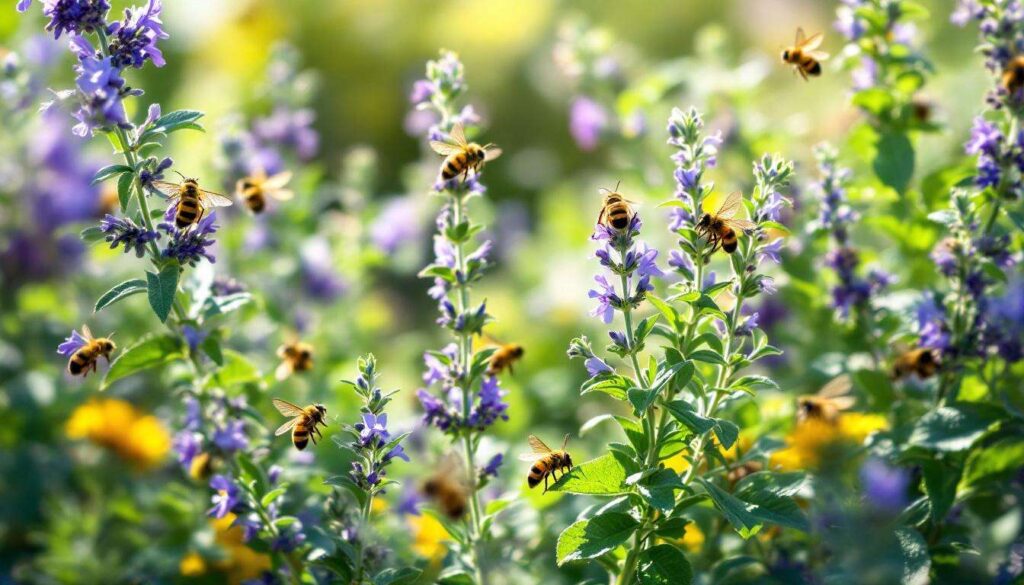
Gardens across the United Kingdom are experiencing a quiet crisis as pollinator populations decline, yet a simple solution lies in the strategic planting of herbs alongside your rosemary. This Mediterranean shrub, with its fragrant needles and delicate blue flowers, serves as an excellent foundation for a pollinator-friendly herb garden. By carefully selecting companion herbs that share similar growing requirements and flowering periods, gardeners can create a thriving ecosystem that supports bees, butterflies and other essential insects throughout the growing season. The practice combines practical gardening wisdom with ecological responsibility, offering benefits that extend far beyond the garden boundary.
Why bring pollinators to your garden ?
The essential role of pollinators in food production
Pollinators are fundamental to the success of any productive garden, with research indicating that approximately one-third of the food we consume depends directly on insect pollination. Bees, butterflies, hoverflies and other beneficial insects transfer pollen between flowers, enabling plants to produce fruits, vegetables and seeds. Without these tireless workers, many common garden crops would fail to set fruit, resulting in significantly reduced harvests.
Benefits beyond the vegetable patch
Attracting pollinators to your herb garden creates advantages that extend throughout your entire outdoor space. Consider these key benefits:
- Increased biodiversity as various species establish themselves in your garden
- Natural pest control through the presence of predatory insects that follow pollinators
- Improved plant health and vigour due to successful pollination
- Educational opportunities for observing nature’s intricate relationships
- Enhanced garden aesthetics with the movement and colour of visiting insects
Creating a continuous food source
A well-planned herb garden provides nectar and pollen throughout multiple seasons, supporting pollinator populations when they need it most. Early spring flowers sustain emerging queen bumblebees, whilst late-season blooms help insects build reserves before winter. This continuity proves especially valuable in urban and suburban areas where natural habitats have become fragmented.
Understanding these fundamental reasons for encouraging pollinators naturally leads to examining which specific herbs work best alongside rosemary to achieve these goals.
The key role of thyme for your rosemary
Shared growing requirements
Thyme represents an ideal companion for rosemary because both herbs originate from Mediterranean regions and thrive in similar conditions. These plants prefer well-drained soil, full sun exposure and relatively low water requirements once established. This compatibility eliminates the challenge of meeting conflicting needs within the same garden bed.
| Growing requirement | Thyme | Rosemary |
|---|---|---|
| Soil drainage | Excellent drainage essential | Excellent drainage essential |
| Sun exposure | Full sun (6+ hours) | Full sun (6+ hours) |
| Water needs | Low to moderate | Low to moderate |
| Soil pH | 6.0-8.0 | 6.0-7.5 |
Complementary flowering patterns
The flowering periods of thyme and rosemary overlap significantly, creating an extended buffet for pollinators. Thyme typically produces masses of tiny flowers in shades of pink, purple or white, which prove particularly attractive to smaller bee species. These diminutive blooms complement rosemary’s larger flowers, offering visiting insects multiple feeding options within a compact area.
Ground-level attraction
Whilst rosemary grows as an upright shrub, thyme forms low mats that spread across the soil surface. This vertical layering maximises pollinator appeal by providing flowers at different heights, accommodating insects with varying flight patterns and preferences. The combination creates visual interest whilst ensuring no space goes unused in attracting beneficial visitors.
Just as thyme complements rosemary through shared requirements and flowering habits, another Mediterranean herb offers equally valuable benefits for pollinator attraction.
Sage: a bee ally
A magnet for bumblebees
Sage produces tubular flowers perfectly designed for bumblebees, with their robust bodies and long tongues capable of reaching deep into the flower structure. The plant’s flowering spikes, typically appearing in late spring and early summer, create vertical accents in the herb garden whilst providing abundant nectar. Bumblebees, amongst the most effective pollinators, visit sage repeatedly throughout the day, establishing reliable foraging routes through your garden.
Culinary and ecological synergy
Beyond its pollinator appeal, sage shares rosemary’s preference for Mediterranean conditions and offers complementary flavours in the kitchen. Both herbs tolerate drought, prefer alkaline to neutral soil and resist many common pests. This practical compatibility makes maintenance straightforward whilst the aromatic foliage of both plants helps deter unwanted insects naturally.
Varieties for extended interest
Different sage varieties extend the pollinator-friendly season:
- Common sage (Salvia officinalis) flowers in late spring
- Purple sage adds ornamental foliage alongside its blooms
- Pineapple sage provides late-season flowers when other sources diminish
- Clary sage offers particularly showy flower spikes attractive to various pollinators
The success of sage in attracting bumblebees finds a parallel in another classic Mediterranean herb that draws an even broader range of pollinating insects.
Lavender and rosemary: a winning duo
A classic pairing with proven results
The combination of lavender and rosemary represents one of the most effective pollinator-attracting partnerships available to gardeners. Both plants share virtually identical growing requirements, making them natural companions in well-drained, sunny positions. Their flowering periods overlap substantially, with lavender typically blooming from early to late summer, creating an extended period of abundant nectar availability.
Attracting diverse pollinator species
Lavender’s distinctive flower spikes draw an impressive variety of beneficial insects:
- Honeybees collect both nectar and pollen in significant quantities
- Bumblebees work the flowers intensively throughout warm days
- Solitary bees find the open flower structure easily accessible
- Butterflies, particularly whites and blues, visit regularly for nectar
- Hoverflies patrol the flowers whilst also hunting for aphids
Practical planting considerations
When establishing lavender near rosemary, spacing proves crucial for optimal results. Allow sufficient room between plants to ensure good air circulation, which prevents fungal diseases in humid conditions. A spacing of 45-60 centimetres between mature plants provides adequate growing room whilst creating a cohesive visual display. Both herbs benefit from annual pruning after flowering, which maintains compact growth and encourages abundant blooms the following season.
| Characteristic | Lavender | Rosemary |
|---|---|---|
| Main flowering period | June-August | March-October |
| Flower colour | Purple, blue, white, pink | Blue, purple, white |
| Height at maturity | 30-90 cm | 60-150 cm |
| Hardiness | Hardy to -15°C | Hardy to -10°C |
Whilst lavender and rosemary create an outstanding foundation for pollinator attraction, another Mediterranean herb offers its own unique appeal to beneficial insects.
Oregano: an irresistible aroma for insects
Abundant small flowers with big impact
Oregano produces masses of tiny tubular flowers clustered in dense heads that prove irresistible to numerous pollinator species. These diminutive blooms, typically appearing in shades of pink, purple or white from mid-summer onwards, contain easily accessible nectar that appeals particularly to smaller bee species and beneficial wasps. The sheer abundance of flowers on a mature oregano plant creates a significant food source during the crucial late-summer period.
Supporting specialist pollinators
Research has identified oregano as particularly valuable for supporting specialist bee species that have declined dramatically in recent decades. These insects, which have evolved to feed on specific plant families, find oregano flowers perfectly suited to their needs. By including oregano in your rosemary companion planting scheme, you contribute to conservation efforts for these threatened pollinators.
Allowing oregano to flower
Many gardeners harvest oregano before flowering to maintain the best leaf flavour, but this practice eliminates the plant’s value to pollinators. A practical compromise involves:
- Dividing plants and designating some specifically for flowering
- Harvesting only half the plant whilst allowing the remainder to bloom
- Taking early-season cuttings before flower buds form
- Planting extra oregano specifically for pollinator support
This approach to oregano cultivation highlights a broader principle that applies to all herbs when the goal includes supporting pollinator populations.
Let your herbs bloom for greater impact
The flowering imperative
The single most important factor in creating a pollinator-friendly herb garden involves allowing plants to flower freely. Whilst culinary use often demands harvesting before blooms appear, this practice directly conflicts with supporting beneficial insects. Flowers provide the nectar and pollen that pollinators require, making them non-negotiable for an ecologically valuable garden.
Balancing harvest and conservation
Gardeners can successfully balance culinary needs with pollinator support through strategic planning:
- Plant more herbs than you need for kitchen use
- Harvest intensively from designated plants whilst leaving others untouched
- Take cuttings early in the season before flower buds develop
- Accept that leaf flavour changes during flowering as a worthwhile trade-off
- Focus harvesting on non-flowering parts of plants
Timing considerations for maximum benefit
Different herbs flower at various times, and understanding these patterns helps create continuous pollinator support. Early-flowering rosemary provides crucial spring resources, thyme blooms in late spring to early summer, lavender peaks in mid-summer, whilst oregano and late-flowering sage extend the season into autumn. This succession ensures visiting insects find food throughout the active growing period.
The multiplier effect
Allowing herbs to bloom creates benefits beyond immediate pollinator support. Flowering plants set seed, providing food for birds and enabling self-seeding that fills gaps in plantings naturally. The presence of abundant pollinators also improves fruit set on nearby vegetables and ornamental plants, creating a virtuous cycle of productivity throughout your garden.
Creating a thriving pollinator habitat through strategic herb planting delivers rewards that extend far beyond the immediate pleasure of watching bees and butterflies at work. The combination of rosemary with compatible Mediterranean herbs establishes a low-maintenance, drought-tolerant planting scheme that supports declining insect populations whilst providing culinary ingredients and year-round garden structure. By choosing thyme, sage, lavender and oregano as companions, gardeners create overlapping flowering periods that sustain pollinators from early spring through late autumn. The key lies in resisting the urge to harvest every stem, instead allowing sufficient plants to bloom freely and fulfil their ecological role. This approach transforms a simple herb patch into a vital refuge for beneficial insects, contributing meaningfully to conservation efforts whilst enhancing the productivity and beauty of the entire garden.