


Rhubarb stands as one of the most rewarding crops for gardeners seeking a reliable, low-maintenance perennial that delivers year after year. With its distinctive tart flavour and vibrant stalks, this hardy plant has graced British gardens for centuries, providing the essential ingredient for countless crumbles, jams, and desserts. Growing rhubarb successfully requires understanding a few fundamental principles, from selecting the right variety to mastering the proper harvesting technique that ensures the plant’s longevity and productivity.
Why grow rhubarb in your garden
A perennial investment with minimal effort
Rhubarb represents an exceptional choice for gardeners who appreciate long-term productivity without constant replanting. Once established, a single crown can produce abundantly for ten to fifteen years, requiring remarkably little intervention beyond basic maintenance. This perennial nature makes rhubarb an economical addition to any vegetable patch or ornamental border.
Nutritional and culinary versatility
The stalks offer significant nutritional benefits, being rich in vitamins C and K, as well as calcium and dietary fibre. Beyond the traditional crumble, rhubarb lends itself to numerous culinary applications:
- Jams and preserves that capture the essence of spring
- Chutneys that complement savoury dishes
- Cordials and cocktails for refreshing beverages
- Roasted accompaniments to game and poultry
Aesthetic contribution to garden design
Beyond its edible qualities, rhubarb provides architectural interest with its large, dramatic leaves and substantial presence. The plant creates an impressive focal point in mixed borders, whilst the vibrant red stalks of certain varieties add visual appeal throughout the growing season.
Understanding these benefits naturally leads to the question of which variety best suits your particular circumstances and preferences.
Choosing the best rhubarb variety
Traditional favourites for reliability
Victoria remains the most widely cultivated variety in British gardens, valued for its dependability and vigorous growth. The stalks begin green and develop red tinges as they mature, offering a balanced tartness ideal for cooking. This variety tolerates a range of soil conditions and climates, making it suitable for novice growers.
Varieties selected for colour and flavour
For gardeners prioritising visual impact and refined taste, several varieties merit consideration:
| Variety | Stalk Colour | Flavour Profile | Special Characteristics |
|---|---|---|---|
| Crimson Cherry | Bright red | Slightly sweeter | Excellent for forcing |
| Canada Red | Deep red throughout | Rich, tangy | Maintains colour when cooked |
| Raspberry Red | Vivid red | Fruity undertones | Modern variety with improved sweetness |
| Timperley Early | Pink-red | Delicate | Ideal for early forcing |
Climate considerations for variety selection
Rhubarb thrives in cooler climates where winter dormancy occurs naturally. Most varieties require a period of cold to stimulate spring growth effectively. Gardeners in milder regions should select varieties known for tolerating warmer conditions, though all rhubarb benefits from some winter chill.
Having selected an appropriate variety, timing the planting correctly ensures the strongest establishment and future productivity.
When to plant rhubarb for optimal growth
Spring planting for immediate establishment
Planting dormant crowns in early spring, typically between March and April, allows the plant to establish roots before the growing season begins in earnest. This timing ensures the rhubarb can develop a robust root system whilst temperatures remain cool and moisture levels stay consistent.
Autumn planting for advanced preparation
Alternatively, planting between October and November enables the crown to settle during the dormant period, resulting in earlier growth the following spring. Autumn-planted rhubarb often demonstrates superior establishment, though protection from severe frost may prove necessary in exposed locations.
Seed sowing for patient gardeners
Growing rhubarb from seed represents a longer-term project, requiring patience as plants take considerably longer to reach productive size:
- Sow seeds indoors in late winter (February)
- Maintain temperatures around 15-20°C for germination
- Transplant seedlings outdoors after the final frost
- Expect harvesting to begin in the third year
Successful establishment depends not only on timing but also on providing the soil conditions that allow rhubarb to flourish.
Preparing the soil to welcome your rhubarb plants
Soil composition and drainage requirements
Rhubarb demands fertile, well-drained soil with a slightly acidic to neutral pH (between 6.0 and 6.8). Heavy clay soils require amendment with grit and organic matter to improve drainage, whilst sandy soils benefit from substantial compost incorporation to enhance water retention and nutrient availability.
Enriching the planting site
Preparation should begin several weeks before planting to allow amendments to integrate properly. Dig a hole approximately 30cm deep and 60cm wide, incorporating generous quantities of well-rotted manure or garden compost. The planting site should receive:
- Two to three buckets of organic matter per square metre
- A handful of bone meal or general-purpose fertiliser
- Thorough mixing to create a nutrient-rich growing medium
Positioning and spacing considerations
Each crown requires adequate space to develop its extensive root system and substantial leaf canopy. Plant crowns with the growing buds positioned just below the soil surface, spacing individual plants 90-120cm apart. This generous spacing prevents overcrowding and ensures sufficient air circulation, reducing disease susceptibility.
With the plant properly established in prepared soil, understanding the correct harvesting method becomes essential for maintaining plant health and productivity.
Mastering the ‘twist’ technique for harvesting
The proper twisting motion explained
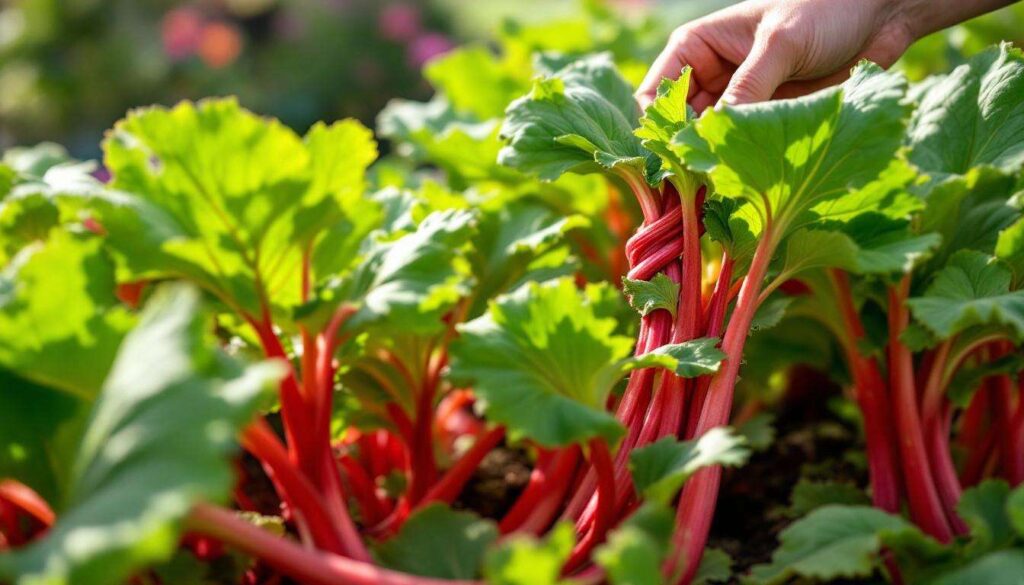
The traditional twist and pull method represents the optimal harvesting technique for rhubarb, preserving plant vigour whilst cleanly removing stalks. Grasp the stalk firmly near its base, twist gently whilst pulling upwards and outwards. This motion separates the stalk cleanly from the crown without leaving a stub that might rot and introduce disease.
Avoiding cutting damage
Using a knife to cut stalks, whilst seemingly efficient, creates open wounds on the crown that serve as entry points for pathogens and pests. The twisting method naturally seals the separation point, maintaining the plant’s natural defences and promoting continued healthy growth throughout the season.
Harvesting guidelines for plant longevity
Responsible harvesting practices ensure rhubarb remains productive for many years:
- Refrain from harvesting during the first year after planting
- Take only a light harvest in the second year
- Harvest freely from the third year onwards
- Always leave at least four stalks on the plant
- Cease harvesting by mid-summer to allow recovery
- Remove only outer stalks, leaving younger central growth
Recognising when stalks are ready
Harvest stalks when they reach 30-40cm in length and display good colour development. Stalks should feel firm and snap cleanly when bent. Avoid harvesting thin, weak stalks as these indicate the plant requires more time to build strength.
Maintaining plant health through proper harvesting connects directly with vigilance against the diseases that occasionally afflict rhubarb.
Identifying and preventing common rhubarb diseases
Crown rot recognition and management
Crown rot represents the most serious threat to rhubarb, caused by various fungal pathogens that thrive in waterlogged conditions. Symptoms include yellowing leaves, stunted growth, and soft, discoloured tissue at the crown. Prevention focuses on ensuring excellent drainage and avoiding damage during harvesting. Affected plants require removal and destruction, with the soil left fallow before replanting.
Fungal leaf spots and their control
Various fungal diseases manifest as spots on rhubarb foliage, though these rarely affect stalk quality significantly. Ramularia and other leaf spot fungi create brown or yellow patches. Management involves:
- Removing affected leaves promptly
- Ensuring adequate spacing for air circulation
- Avoiding overhead watering that promotes fungal spread
- Clearing debris around plants in autumn
Virus diseases and their implications
Viral infections, though less common, cause mottling, distortion, and reduced vigour. No cure exists for viral diseases, necessitating complete plant removal to prevent spread to healthy specimens. Purchasing certified disease-free crowns from reputable suppliers minimises this risk significantly.
Preventative cultural practices
The most effective disease management relies on creating conditions unfavourable to pathogen development. Annual mulching with well-rotted compost suppresses soil-borne diseases whilst feeding the plant. Removing flower stalks promptly prevents the plant from weakening, maintaining its natural disease resistance throughout the growing season.
Growing rhubarb successfully combines selecting suitable varieties with providing proper growing conditions and employing correct harvesting techniques. The twist method protects plant health whilst ensuring clean stalk removal, and attention to soil preparation creates the foundation for years of productive growth. By understanding common diseases and implementing preventative measures, gardeners can maintain vigorous rhubarb plants that reliably produce abundant harvests of these distinctive, flavourful stalks for culinary enjoyment throughout spring and early summer.