



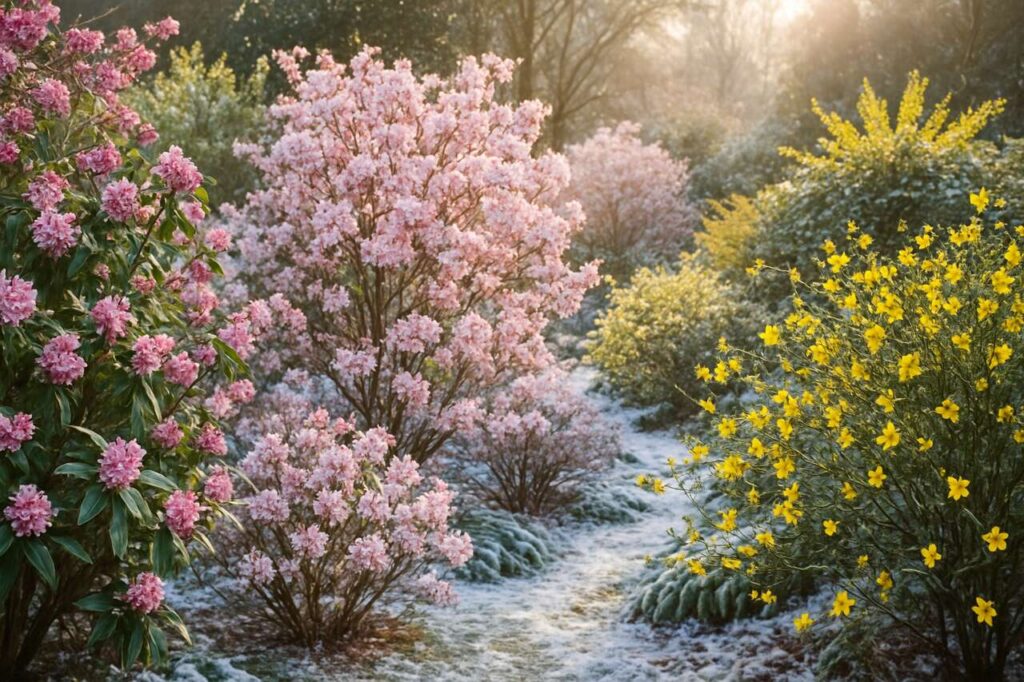
When winter arrives and most gardens retreat into dormancy, a carefully chosen selection of flowering shrubs can transform your outdoor space into a fragrant sanctuary. These remarkable plants defy the cold, producing blooms that release intoxicating scents whilst adding splashes of colour to the monochrome landscape. Far from being mere ornamental additions, these winter-flowering shrubs provide essential nectar for early pollinators and create visual interest during the bleakest months of the year.
Introduction to the importance of fragrant shrubs in winter
The role of winter fragrance in garden design
Winter gardens need not be lifeless expanses of bare branches and frozen soil. Fragrant flowering shrubs serve a dual purpose: they enliven the senses whilst providing crucial ecological benefits during a season when resources are scarce. The perfume from winter blooms carries further in cold, still air, meaning that even a single well-placed shrub can scent an entire garden path or seating area.
These plants offer strategic advantages for garden planning:
- They create focal points when herbaceous borders lie dormant
- Their scent provides sensory pleasure during outdoor winter activities
- Early blooms support bees and other pollinators emerging on mild days
- Many species feature attractive evergreen foliage that maintains structure year-round
Selecting the right positions for maximum impact
Placement proves critical when cultivating winter-flowering shrubs. Position them near frequently used pathways, entrances, or windows where their fragrance can be appreciated without venturing far into the garden. Sheltered spots protected from harsh winds allow blooms to develop fully and release their scent more effectively. South-facing walls provide additional warmth that encourages earlier flowering, whilst partial shade suits many species perfectly.
| Location Type | Advantages | Suitable Shrubs |
|---|---|---|
| Near entrances | Daily fragrance appreciation | Sarcococca, Daphne |
| Sheltered borders | Protection from frost damage | Viburnum, Mahonia |
| Sunny walls | Extended flowering period | Hamamelis, Daphne |
Understanding these fundamental principles sets the foundation for exploring specific species that excel in winter conditions.
Sarcococca: the discreet charm of sweet box
Compact growth with powerful fragrance
Sarcococca, commonly known as sweet box or Christmas box, produces an extraordinarily potent fragrance from remarkably modest blooms. These small, creamy-white flowers appear from January through February, tucked amongst glossy evergreen foliage. Despite their diminutive size, the blooms release a honeyed vanilla scent that can perfume an entire garden on still winter days.
The shrub typically reaches heights between 60 and 150 centimetres, making it ideal for:
- Underplanting beneath deciduous trees
- Creating low hedges along pathways
- Filling shaded corners where few other plants thrive
- Container planting near doorways
Cultivation requirements and varieties
Sarcococca demonstrates remarkable tolerance for challenging conditions, thriving in deep shade where most flowering shrubs fail. It prefers moist, well-drained soil enriched with organic matter but adapts to various soil types. Once established, it requires minimal maintenance beyond occasional shaping after flowering.
Several species offer subtle variations: Sarcococca confusa produces the strongest fragrance, whilst Sarcococca hookeriana var. digyna features particularly attractive purple-black berries that follow the flowers. These berries provide food for birds during late winter and early spring.
The understated elegance of sarcococca contrasts beautifully with showier winter bloomers that command attention through bold colour.
Mahonia: the golden glow of winter
Architectural foliage meets vibrant blooms
Mahonia brings dramatic architectural presence to winter gardens through its distinctive spiny, holly-like foliage arranged in whorls along sturdy stems. From November onwards, depending on the variety, racemes of bright yellow flowers emerge, standing erect above the foliage like golden candelabras. The blooms emit a sweet, lily-of-the-valley fragrance that intensifies on mild days.
This versatile shrub offers multiple seasonal attractions:
- Evergreen foliage provides year-round structure
- Winter flowers attract early bumblebees and honeybees
- Spring brings clusters of blue-black berries resembling miniature grapes
- Autumn sees some varieties develop bronze or purple leaf tints
Growing conditions and popular cultivars
Mahonia x media cultivars represent the most commonly grown forms, with ‘Charity’ and ‘Winter Sun’ producing particularly long flower spikes. These hybrids typically reach 2 to 3 metres in height and spread, creating substantial specimens. Mahonia japonica offers a more compact alternative with gracefully arching flower clusters and exceptional fragrance.
| Variety | Height | Flowering Period | Fragrance Intensity |
|---|---|---|---|
| Mahonia x media ‘Charity’ | 2-3m | November-February | Moderate |
| Mahonia japonica | 1.5-2m | January-March | Strong |
| Mahonia x media ‘Winter Sun’ | 2-3m | November-January | Moderate-Strong |
Mahonia tolerates both full sun and partial shade, though flowering proves most prolific in brighter positions. Well-drained soil suits it best, and established plants demonstrate good drought tolerance.
Whilst mahonia commands attention through bold form and colour, other winter shrubs captivate through sheer floral abundance.
Viburnum: exuberant flowering despite the cold
Winter-flowering varieties for maximum impact
Viburnum x bodnantense and Viburnum farreri rank amongst the most reliable winter-flowering shrubs, producing clusters of intensely fragrant pink-tinged white blooms from November through March. The flowers appear on bare stems, creating a striking display that becomes more pronounced as the season progresses. Their scent, reminiscent of hyacinths with almond undertones, carries considerable distances.
These deciduous viburnums offer substantial presence in the garden:
- Mature specimens reach 2 to 3 metres in height and spread
- Flowers open in succession, providing months of continuous bloom
- Mild spells trigger heavier flowering
- Red berries occasionally develop in summer
Care and positioning for optimal performance
Viburnums perform best in full sun to light shade with shelter from harsh easterly winds that can damage emerging blooms. They tolerate most soil types provided drainage remains adequate, though they appreciate moisture-retentive conditions. Pruning should occur immediately after flowering to avoid removing the following year’s flower buds.
The cultivar ‘Dawn’ represents the most widely available form, valued for its reliability and abundant flowering. ‘Charles Lamont’ produces deeper pink blooms with particularly strong fragrance. Both varieties demonstrate excellent cold hardiness, withstanding temperatures well below freezing without significant damage.
Where viburnum offers abundant clusters of blooms, other winter shrubs captivate through individual flower perfection and extraordinary scent.
Daphne: the fragrant delicacy of the winter garden
Unmatched perfume from petite flowers
Few winter shrubs rival Daphne for sheer olfactory impact. Daphne bholua and Daphne odora produce small, tubular flowers in shades of pink and white that release one of the most intoxicating fragrances in the plant kingdom. A single shrub can scent an entire garden, with the perfume intensifying during evening hours.
Daphne species bloom from late winter into early spring, offering:
- Exceptionally powerful fragrance from modest-sized blooms
- Compact growth suitable for smaller gardens
- Evergreen or semi-evergreen foliage depending on variety
- Attractive form requiring minimal pruning
Cultivation challenges and solutions
Daphnes possess a reputation for being temperamental, occasionally succumbing to sudden collapse. Success depends on providing optimal conditions from planting: well-drained, humus-rich soil with neutral to slightly alkaline pH proves essential. Avoid disturbing established plants, as they resent root disturbance and transplanting rarely succeeds.
| Species | Evergreen Status | Height | Best Position |
|---|---|---|---|
| Daphne bholua | Semi-evergreen | 2-3m | Sheltered, partial shade |
| Daphne odora | Evergreen | 1-1.5m | Sheltered, sun or shade |
| Daphne mezereum | Deciduous | 1-1.2m | Woodland edge, dappled shade |
Position daphnes where their fragrance can be appreciated but where they will remain undisturbed for years. Container cultivation suits Daphne odora particularly well, allowing precise control over soil conditions.
Beyond fragrance alone, some winter shrubs combine scent with spectacular visual displays that brighten the darkest months.
Hamamelis: an enchanting and colourful touch
Spider-like blooms in vivid hues
Hamamelis, commonly known as witch hazel, produces extraordinarily distinctive flowers comprising ribbon-like petals in shades of yellow, orange, and red. These spidery blooms appear on bare branches from January through March, creating ethereal clouds of colour. Most varieties release a sweet, spicy fragrance, though intensity varies between cultivars.
The appeal of hamamelis extends beyond winter flowering:
- Autumn foliage displays in brilliant yellows, oranges, and reds
- Architectural branching structure provides winter interest
- Flowers withstand frost, often appearing more vibrant after cold snaps
- Long-lived specimens improve with age
Selecting varieties and providing ideal conditions
Hamamelis mollis offers the strongest fragrance amongst species, with bright yellow flowers and excellent autumn colour. Hybrid cultivars derived from H. x intermedia provide the widest colour range: ‘Diane’ produces deep red blooms, ‘Jelena’ offers copper-orange flowers, whilst ‘Pallida’ features pale yellow blooms with exceptional cold tolerance and fragrance.
These shrubs require patience, as young plants may take several years to flower freely. Mature specimens reach 3 to 4 metres in height and spread, demanding adequate space. They prefer acid to neutral soil enriched with organic matter and perform best in sun or light shade. Avoid pruning except to remove damaged wood, as flowering occurs on mature growth.
The investment in hamamelis rewards gardeners with decades of reliable winter colour and fragrance, creating focal points that anchor the winter garden design.
By incorporating these seven exceptional shrubs into your planting scheme, you create a winter garden that engages multiple senses and provides ecological benefits. Each species brings unique characteristics: sarcococca for shaded corners, mahonia for architectural presence, viburnum for floral abundance, daphne for intoxicating perfume, and hamamelis for spectacular colour. Together, they ensure that even during the coldest months, your garden remains a place of beauty, fragrance, and life. Strategic placement near paths and seating areas maximises enjoyment, whilst thoughtful combinations extend the flowering season from November through March, proving that winter gardens need never be dull or lifeless.