



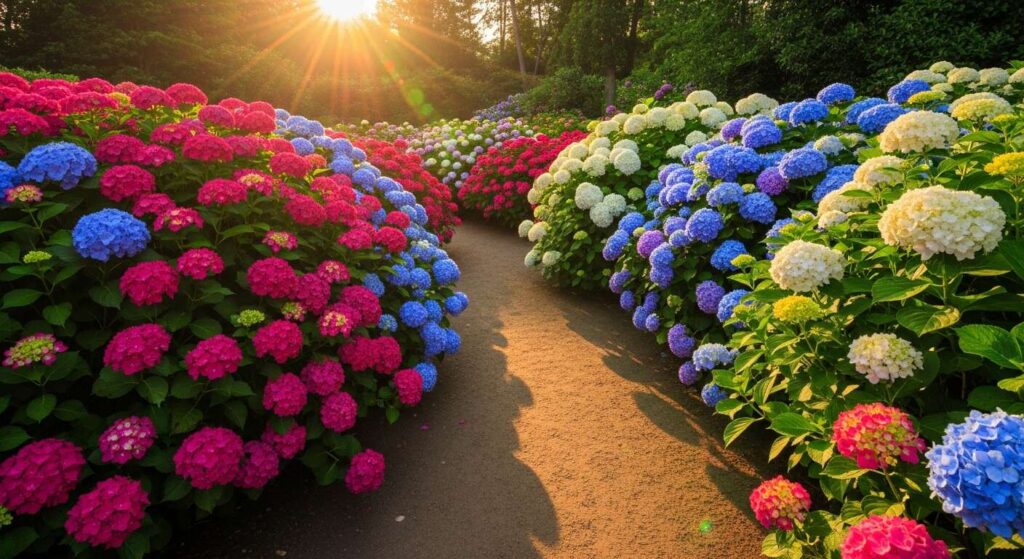
Hydrangeas have long captivated gardeners with their voluminous blooms and remarkable ability to transform outdoor spaces into enchanting retreats. These versatile shrubs offer an array of colours, from delicate blues and purples to vibrant pinks and pristine whites, making them ideal candidates for a variety of garden designs. Whether you’re planning a complete garden overhaul or simply seeking to enhance specific areas, hydrangeas provide both structural elegance and seasonal interest that few other plants can match.
Layout ideas for a hydrangea garden
Framing your lawn with hydrangeas
Creating a compact garden frame around your lawn establishes clear boundaries whilst adding colour and texture to your outdoor space. By positioning hydrangeas along the perimeter, you can transform a simple grassed area into a well-defined garden room. This approach works particularly well in smaller gardens where space is at a premium, as the shrubs provide structure without overwhelming the landscape.
Planting hydrangeas against fences and walls
Utilising hydrangeas along fences offers multiple benefits for garden design:
- Softens harsh architectural lines and wooden structures
- Creates a natural privacy screen during the growing season
- Provides a colourful backdrop for smaller perennials
- Fills vertical space efficiently in narrow garden beds
When planting against walls or fences, ensure adequate spacing of approximately 90 to 120 centimetres between plants to allow for mature growth and proper air circulation.
Designing with different hydrangea varieties
Selecting appropriate varieties is crucial for achieving your desired garden layout. The following table illustrates popular hydrangea cultivars and their characteristics:
| Variety | Mature Height | Bloom Period | Colour Range |
|---|---|---|---|
| Annabelle | 120-150 cm | June-August | White to cream |
| Limelight | 180-210 cm | July-September | Lime green to pink |
| Endless Summer | 90-120 cm | June-October | Blue to pink |
Understanding these fundamental layout principles sets the stage for more specific applications throughout your garden, particularly along frequently travelled routes.
Creating a hydrangea-bordered pathway
Planning your pathway design
A hydrangea-lined walkway creates an inviting journey through your garden whilst providing seasonal drama. When planning this feature, consider the pathway width in relation to the mature size of your chosen varieties. For standard garden paths measuring 90 to 120 centimetres wide, select compact cultivars that won’t encroach on walking space when fully grown.
Spacing and planting techniques
Proper spacing along pathways ensures both visual impact and plant health. Position hydrangeas at regular intervals, typically:
- Every 100 centimetres for smaller varieties creating a continuous border
- Every 150 centimetres for larger specimens allowing glimpses between plants
- Staggered on both sides for a more natural, cottage-garden appearance
- Alternating colours to create rhythm and visual interest
Maintaining pathway hydrangeas
Pathway plantings require consistent maintenance to prevent overgrowth onto walking surfaces. Annual pruning in late winter or early spring keeps plants within bounds whilst encouraging vigorous flowering. Ensure adequate irrigation during dry spells, as hydrangeas positioned near paved surfaces may experience increased water stress due to reflected heat and reduced soil moisture.
Beyond pathways, hydrangeas can enhance architectural features of your home, particularly around windows where their blooms can be appreciated from both inside and out.
Using hydrangeas around windows
Framing windows with seasonal colour
Planting hydrangeas beneath and around windows creates a living picture frame that changes with the seasons. This technique works exceptionally well with ground-floor windows where the blooms can be viewed at eye level from inside. Select varieties that won’t grow tall enough to obstruct light or views, typically those reaching 90 to 120 centimetres at maturity.
Selecting appropriate varieties for window plantings
When choosing hydrangeas for window surrounds, consider these essential factors:
- Mature height relative to window sill and lintel positions
- Bloom colour that complements exterior paint and trim
- Foliage density for privacy without complete obstruction
- Seasonal interest beyond the flowering period
Installation considerations
Foundation plantings around windows require careful attention to drainage and soil conditions. Ensure that soil near the house foundation is amended with organic matter and that plantings don’t interfere with building moisture barriers or drainage systems. Maintain a minimum clearance of 30 centimetres between plants and exterior walls to allow for air circulation and prevent potential moisture issues.
Whilst window plantings offer vertical interest, creating overhead structures with hydrangeas introduces an entirely different dimension to garden design.
Building a floral archway with hydrangeas
Constructing the support structure
A hydrangea archway serves as both a functional passage and a stunning focal point. Begin with a sturdy framework constructed from weather-resistant materials such as treated timber, metal, or vinyl. The structure should measure at least 210 centimetres in height and 120 centimetres in width to accommodate comfortable passage whilst supporting mature plants.
Training climbing and rambling varieties
Although hydrangeas aren’t natural climbers, certain varieties can be trained and supported to create an arch effect. Climbing hydrangea performs best for this purpose, though it requires patience as establishment can take several years. Alternatively, position large mophead or panicle varieties on either side of the arch, allowing their substantial blooms to drape over the structure.
Maintenance requirements for archways
Floral archways demand regular attention to maintain their shape and visual appeal:
- Secure new growth to the framework using soft ties or clips
- Prune wayward stems that disrupt the arch’s silhouette
- Remove spent blooms to encourage continued flowering
- Monitor for adequate moisture, as elevated plantings dry out quickly
For gardeners with limited ground space or those seeking flexibility in their planting schemes, container cultivation offers an excellent alternative to in-ground installations.
Incorporating hydrangeas in planters
Selecting suitable containers
Container cultivation allows hydrangeas to thrive in locations where ground planting isn’t feasible, including patios, balconies, and courtyards. Choose pots with a minimum diameter of 45 centimetres and adequate drainage holes. Materials such as terracotta, glazed ceramic, or resin work well, though terracotta requires more frequent watering due to its porous nature.
Soil and fertilisation requirements
Container-grown hydrangeas require specific growing media and nutrition. Use a high-quality potting compost enriched with organic matter, avoiding garden soil which compacts in containers. The following table outlines fertilisation schedules for optimal container performance:
| Season | Fertiliser Type | Frequency |
|---|---|---|
| Spring | Balanced slow-release | Once at bud break |
| Summer | Liquid bloom booster | Fortnightly |
| Autumn | Low-nitrogen formula | Once in early September |
Watering and winter protection
Container hydrangeas require consistent moisture throughout the growing season, often necessitating daily watering during hot weather. In winter, protect containers from freezing by moving them to sheltered locations or wrapping pots with insulating material. Roots in containers are more vulnerable to frost damage than those insulated by ground soil.
Whether planted in containers or borders, achieving harmonious colour combinations elevates hydrangea displays from pleasant to extraordinary.
Harmonising hydrangea flower colours in the garden
Understanding colour variation factors
Hydrangea bloom colour is influenced by soil pH levels, particularly in bigleaf varieties. Acidic soils with pH below 6.0 produce blue flowers, whilst alkaline conditions above 7.0 yield pink blooms. White varieties remain unaffected by soil chemistry, making them valuable for predictable colour schemes.
Creating intentional colour palettes
Designing with hydrangea colours requires consideration of both the blooms and surrounding plantings. Effective colour harmonies include:
- Monochromatic schemes using varying shades of blue or pink
- Complementary pairings such as blue hydrangeas with orange daylilies
- Analogous combinations featuring blues, purples, and pinks
- Neutral palettes anchored by white hydrangeas with green foliage plants
Adjusting and maintaining desired colours
To achieve specific bloom colours, amend soil chemistry accordingly. For blue flowers, apply aluminium sulphate or sulphur to lower pH. For pink blooms, add garden lime to raise pH levels. Test soil annually and make adjustments gradually, as dramatic pH shifts can stress plants. Remember that colour changes take time, often requiring a full growing season to manifest fully.
Hydrangeas offer extraordinary versatility for garden design, from structural hedging and pathway borders to container displays and colour-coordinated plantings. Their adaptability to various garden styles, combined with relatively modest maintenance requirements, makes them invaluable for both novice and experienced gardeners. By carefully selecting varieties suited to your specific conditions and design goals, you can create stunning outdoor spaces that provide months of visual interest and enjoyment throughout the growing season.